

What if the right pilot mentor isn’t a famous captain, but an instructor or local pilot who understands your next training milestone? Finding a pilot mentor in Orlando can feel daunting when you’re unsure whom to approach or how to start a professional conversation.
That hesitation is understandable. You want advice that fits your current stage, whether you’re beginning your Private Pilot License (PPL) or preparing for a professional career, and you don’t want to impose on someone’s time. A useful mentor relationship can start with one specific question and grow through consistent training, trust, and follow-through.
This guide covers practical ways to meet aviation mentors and peers around Orlando and Kissimmee, make a respectful first request, and turn advice into clear next steps. You’ll also learn how to connect mentorship with your training milestones, from early flight lessons to advanced career planning.
Key Takeaways
- Finding a pilot mentor in Orlando starts with identifying the guidance you need at your current training or career stage.
- Look beyond one-on-one introductions: local training, aviation events, student networks, OBAP Orlando, and Women in Aviation Central Florida can help you build connections.
- A mentor complements flight instruction and official requirements. Use their perspective to support, not replace, structured training.
- Make your first request easy to answer by sharing a clear goal, asking one specific question, and following up thoughtfully.
- Connect conversations to your next milestone, whether you’re working toward a PPL, progressing from PPL to CPL, or pursuing advanced instructor certification.
Orlando Pilot Mentors: What Guidance Can and Cannot Do
A pilot mentor is an experienced aviation professional who shares perspective, feedback, and encouragement as you work toward your goals. In Orlando and Kissimmee, that person might be a flight instructor, working pilot, or another aviation professional whose experience relates to the questions you’re facing. Mentorship can make your path clearer, but it doesn’t replace structured flight training.
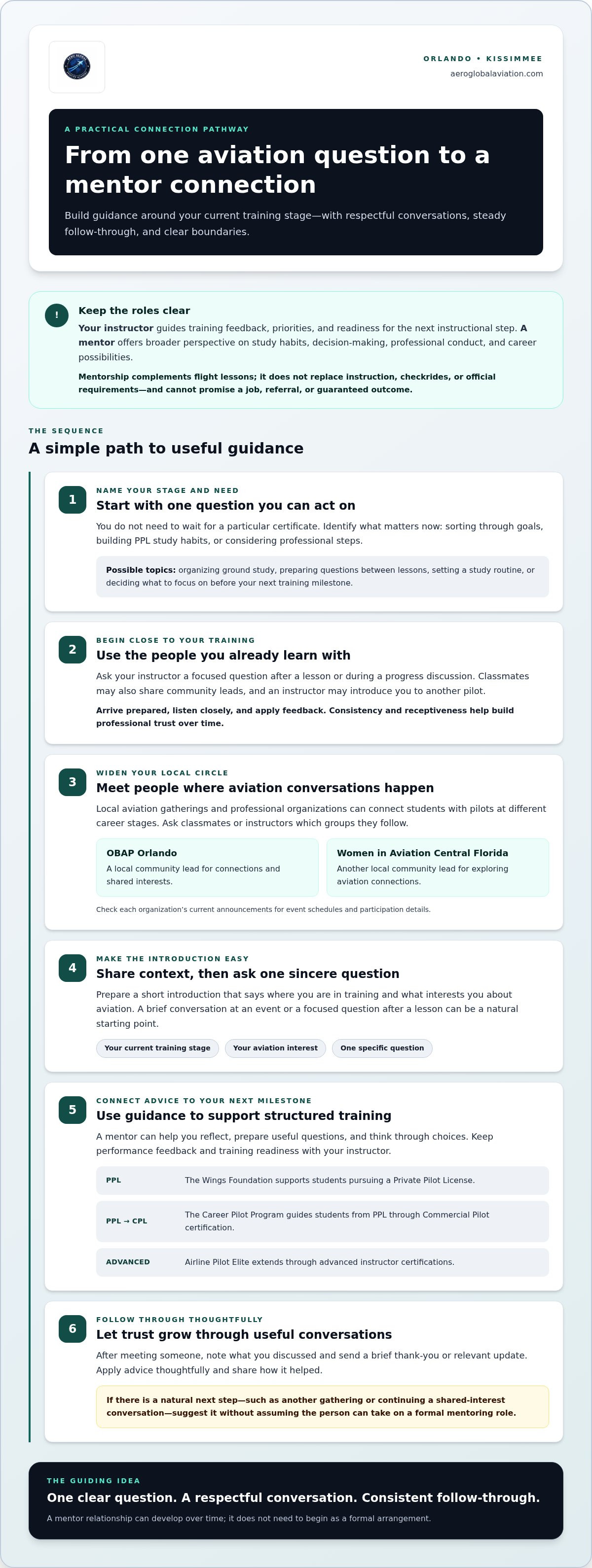
Your instructor provides training feedback and guides your progress through instruction. A mentor can help you reflect on study habits, decision-making, professional conduct, and career possibilities. They might help you prepare useful questions, but they don’t replace flight lessons, checkrides, or official requirements. For background on the stages involved, see this overview of the pilot certification process in the United States.
A mentor can offer perspective and preparation, but can’t promise a job, referral, or guaranteed outcome. Use advice to make informed choices, not as a shortcut around the work, standards, and experience your goals require.
What does a pilot mentor do for a student pilot?
A useful mentor helps you turn a broad ambition into questions you can act on. If you’re working toward a Private Pilot License (PPL), you might ask how to organize ground study, prepare questions between lessons, or build a consistent routine. If you’re considering professional flying, ask what habits helped the mentor prepare for greater responsibility or make decisions about their own career.
Keep the roles clear. Ask your instructor for feedback on your performance, training priorities, and readiness for the next step in your instruction. Ask a mentor for broader perspective, such as how to balance study with practice or how to learn from a challenging training week. A mentor can help you frame a conversation with your instructor rather than second-guessing their instruction.
When should you look for a mentor in Orlando?
You don’t need to wait for a particular certificate or career milestone. Seek guidance before training if you’re sorting through your goals, during PPL training as you build study and decision-making habits, or later as you consider professional steps. The right time is when you can name a question you’d value another person’s experience answering.
Start with a brief conversation about one topic, such as setting a study routine or deciding what to focus on before your next training milestone. Finding a pilot mentor in Orlando is less about securing an instant, formal arrangement and more about building trust through respectful conversations and follow-through. Apply advice thoughtfully, share how it helped, and let the relationship develop at a pace that works for both of you.
Where to Meet Pilot Mentors Around Orlando and Kissimmee
Finding a pilot mentor in Orlando doesn’t have to begin with a cold message to a stranger. Start where aviation conversations already happen: during flight training, through classmates, at local aviation gatherings, and in professional organizations. An instructor may introduce you to another pilot, a fellow student may share a community lead, or a brief conversation at an event may reveal a shared interest worth following up on.
For many students, the most accessible starting points are their training community, fellow learners, and local aviation organizations. The Aircraft Owners and Pilots Association explains how mentorship can develop through connections at local airports in its guide to the AOPA pilot mentor relationship. Use everyday settings to meet people naturally, rather than treating networking as a one-time search for a perfect mentor.
Use flight training and instructor relationships as a starting point
Ask your instructor a focused question after a lesson or during a progress discussion. For example, ask how to make your ground-study routine more effective or what topic to review before your next training milestone. Arrive prepared, listen closely, and apply the feedback. Consistency and receptiveness help establish professional trust over time.
Structured training also gives you regular opportunities to learn from aviation educators as your goals develop. At Aero Global Aviation Academy in Kissimmee and Orlando, the Wings Foundation supports students pursuing a Private Pilot License (PPL), the Career Pilot Program guides students from PPL through Commercial Pilot certification, and Airline Pilot Elite extends through advanced instructor certifications. Explore these Orlando-area flight training pathways and connect your questions to the milestone you’re working toward.
Explore Orlando-area aviation communities and events
Local aviation gatherings can bring students into conversation with pilots at different career stages. OBAP Orlando and Women in Aviation Central Florida are community leads for exploring connections and shared interests. Check each organization’s current announcements for event schedules and participation details. You can also ask classmates or instructors which local groups they follow.
Make it easy for someone to start a conversation. Prepare a short introduction that says where you are in training and what interests you about aviation, then think of one sincere question. After meeting someone, note what you discussed and follow up with a brief thank-you or a relevant update. If there’s a natural next step, such as attending another gathering or continuing a conversation about a shared aviation interest, suggest it without assuming the person can take on a formal mentoring role. Considerate follow-through can turn a first introduction into a useful professional connection.
Choosing the Right Pilot Mentor: Instructor, Career Guide, or Peer
The best mentor for you depends on the question you need answered. You don’t need to find an airline captain or someone with hiring connections to get useful guidance. A flight instructor, working aviation professional, fellow student, or community contact may each offer a different perspective. The FAA’s best practices for mentoring can also help you think about what makes a mentoring relationship constructive.
Use this quick comparison to match your current need with a useful connection:
If you need help with… Consider connecting with…
- Flight skills, lesson feedback, or training priorities: Your flight instructor, who can assess your performance and guide your training.
- Career exploration or professional perspective: A career mentor with relevant aviation experience, who can share insight into their path and the choices they faced.
- Study routines, encouragement, or shared experience: A peer mentor or fellow student, who can compare approaches and help you feel less alone in training.
- Meeting people and learning about aviation communities: A community contact, who can point you toward conversations, groups, or events connected to your interests.
Think of these relationships as a small support network, not a search for one person who can answer every question. A peer can be a good study companion without having the expertise to assess your flying. A career guide can offer perspective without being responsible for your instruction. Matching the person to the question helps you get more useful guidance.
Should your flight instructor also be your mentor?
There can be overlap. An instructor may encourage your progress and share professional perspective, while their primary training role is to focus on standards, safety, and your performance. Keep lesson time centered on instruction. If you have broader career questions, ask whether there’s an appropriate time for a separate conversation rather than letting them take over a flight lesson or progress discussion.
What if you are new to aviation or changing careers?
Start with approachable questions about preparing for training, building a study routine, or exploring aviation career paths. You don’t need an impressive résumé to begin a useful conversation. Curiosity, preparation, and respect for someone’s time matter more than credentials you haven’t had the chance to earn yet.
Student networks can offer companionship as you learn, compare notes, and work through common challenges. Treat that support as a complement to professional expertise, not a replacement for instruction or individualized career advice. For anyone finding a pilot mentor in Orlando, choosing a connection based on your immediate goal is a practical first step. As your milestones change, the kind of guidance you need may change too.
How to Approach a Pilot Mentor and Build a Meaningful Connection
A respectful first request is specific, brief, and easy to answer. Before reaching out, decide what you’re working toward and what perspective would help. Then choose someone whose experience connects to that question. A thoughtful approach gives the other person room to respond and gives you a clear starting point for a professional relationship.
- Identify a goal. Name the decision or milestone you’re working on, such as improving your study routine or learning about a career path.
- Find a relevant connection. Consider an instructor, aviation professional, classmate, or community contact whose experience fits your question.
- Introduce yourself. Share your name, current aviation stage, and how you learned about them.
- Make one specific request. Ask one focused question and, if appropriate, offer a brief conversation at a time that suits them.
- Follow up thoughtfully. Thank them, act on useful advice, and share a concise update when you’ve made progress.
What should you say in your first message?
Keep the message personal and concise. Mention a shared connection or a relevant part of their experience, then make a modest request rather than asking for broad career access. For example:
Hello [Name], I’m [Your Name], and I’m currently [your aviation stage]. I heard you speak at [event] / I was introduced to you by [person]. I’m working on [specific goal] and wondered if you’d be open to a brief conversation about [focused question]. I understand you may have a busy schedule. Thank you for considering it.
If they decline or don’t respond, accept that graciously. Don’t send repeated messages or pressure them for an explanation. A simple thank-you is enough, and you can continue looking for guidance through other aviation connections.
How do you keep a mentor relationship useful over time?
For each conversation, bring a short update and one or two questions. Write down any next step you agree to take, such as reviewing a topic, discussing a goal with your instructor, or researching a career option. Follow through, then let your mentor know what you learned. This shows that you value their time without expecting constant availability.
As your training advances, revisit what guidance would help most. A question that matters during foundational learning may differ from one that comes up while planning professional qualifications. Finding a pilot mentor in Orlando is only the beginning. Applying advice and communicating your progress helps make the connection worthwhile. If you’re building a training plan alongside those conversations, explore Aero Global Aviation Academy’s flight training pathways to connect your current milestone with your longer-term goals.
Build Your Pilot Path in Orlando with Consistent Training and Guidance
Mentorship works best when it supports the training milestone in front of you. Use conversations to clarify questions, reflect on feedback, and think through longer-term decisions. Keep lessons, structured instruction, and required evaluations at the center of your progress. A mentor’s perspective can help you make better use of your training, but it doesn’t replace it.
Match mentorship questions to your training stage
Your questions will change as your skills and responsibilities develop. Make them specific to the work you’re doing now:
- Working toward a Private Pilot License (PPL): Ask about preparing for lessons, building steady study habits, or developing confidence while keeping safety at the forefront.
- Progressing toward Commercial Pilot certification: Discuss skill development, professional expectations, and how to approach the transition from student training toward commercial flying.
- Pursuing advanced training: Ask about instructor development, communicating clearly with learners, and the responsibility that comes with teaching others.
Bring questions back to your training plan and discuss instructional feedback with your instructor. Connecting advice to practice helps keep your next step grounded in your current progress, rather than a general career ideal.
Turn guidance into a clear next step with Aero Global Aviation Academy
Aero Global Aviation Academy serves the Kissimmee and Orlando area with training pathways for different stages. The Wings Foundation supports students pursuing a PPL. The Career Pilot Program guides students from PPL through Commercial Pilot certification. Airline Pilot Elite covers training through advanced instructor certifications.
Use your current experience to identify the milestone you want to reach next. If you’re beginning, that may mean building a foundation toward your PPL. If you’re already training, it may mean planning the step from private to commercial preparation or considering advanced instructor development. Consistent instruction gives you regular opportunities to seek feedback and connect mentor conversations to real progress.
Finding a pilot mentor in Orlando can be one useful part of your journey, alongside a clear training plan and the people who support your learning. Explore pilot training at Aero Global Aviation Academy to see which pathway aligns with your goals and consider the next step for your current stage.
Take the Next Step Toward Your Pilot Goals
Finding a pilot mentor in Orlando begins with a clear question, the right kind of connection, and respectful follow-through. Mentorship adds perspective and encouragement, while structured instruction keeps your training grounded in the skills and milestones ahead. As your goals develop, your mentor network can grow with them.
Aero Global Aviation Academy serves the Kissimmee and Orlando area with training pathways for different stages: Wings Foundation supports PPL students, the Career Pilot Program guides students from PPL through CPL, and Airline Pilot Elite covers training through advanced instructor certifications. Connect your current experience to the milestone you want to reach next.
Explore pilot training at Aero Global Aviation Academy and choose the pathway that fits your aviation goals. Every strong pilot journey starts with a practical next step. Take yours with Aero Global in Kissimmee and Orlando.
Frequently Asked Questions
How do I find a pilot mentor in Orlando?
Start with people and communities connected to your current aviation goal. Ask an instructor for a relevant introduction, talk with classmates, and look into local aviation organizations or gatherings. OBAP Orlando and Women in Aviation Central Florida are possible community leads; review their current announcements for activity and participation details. Before reaching out, identify one focused question so you can explain what guidance would be useful.
Can my flight instructor be my pilot mentor?
Yes, an instructor can offer both training feedback and broader encouragement, but keep those roles clear. Use flight and lesson time for instruction, safety, and feedback on your performance. For wider career questions, ask whether a separate conversation would be appropriate. You can also seek a career mentor or peer for topics beyond your instructor’s training role, such as career exploration or shared study routines.
What should I say when asking a pilot to mentor me?
Introduce yourself, explain your current aviation stage, and say how you found the person. Then ask one specific question connected to their experience, such as how they prepared for a training milestone. You could write: “I’m working toward my PPL and would value your perspective on building a consistent study routine. Would you be open to a brief conversation?” Thank them, and accept a declined request graciously.
Are there pilot networking groups in Orlando?
Orlando-area students can explore aviation communities such as OBAP Orlando and Women in Aviation Central Florida, along with local events and student networks. These can offer opportunities to meet pilots and other aviation professionals with varied experience. Group schedules and participation details can change, so review current announcements before attending. Prepare a short introduction and one genuine question to make it easier to start a conversation.
Do I need to be an experienced pilot to find a mentor?
No, you can seek guidance before beginning flight training or while working toward your first certificate. Start with practical questions about preparing for lessons, developing study habits, or exploring aviation goals. Fellow students can offer encouragement and shared experience, while instructors and experienced pilots bring different perspectives. You don’t need an impressive résumé to make a respectful connection; curiosity, preparation, and follow-through are good starting points.
Can a pilot mentor help me become an airline pilot?
A mentor can share career perspective, help you think through training milestones, and encourage professional habits, but can’t guarantee an airline job or replace instruction and required qualifications. Connect conversations to your next step, whether you’re pursuing a PPL, progressing toward Commercial Pilot certification, or considering advanced instructor training. A structured training pathway, combined with thoughtful guidance, can help keep your long-term goal connected to practical progress.
How often should I talk with a pilot mentor?
Set a pace that works for both of you rather than assuming a fixed schedule. Some relationships grow through occasional conversations tied to specific milestones; others may involve periodic check-ins. Before each discussion, prepare a concise update and a focused question. Follow through on agreed actions, share relevant progress, and respect the mentor’s availability. As your training goals change, revisit what kind of guidance would be most useful.


