
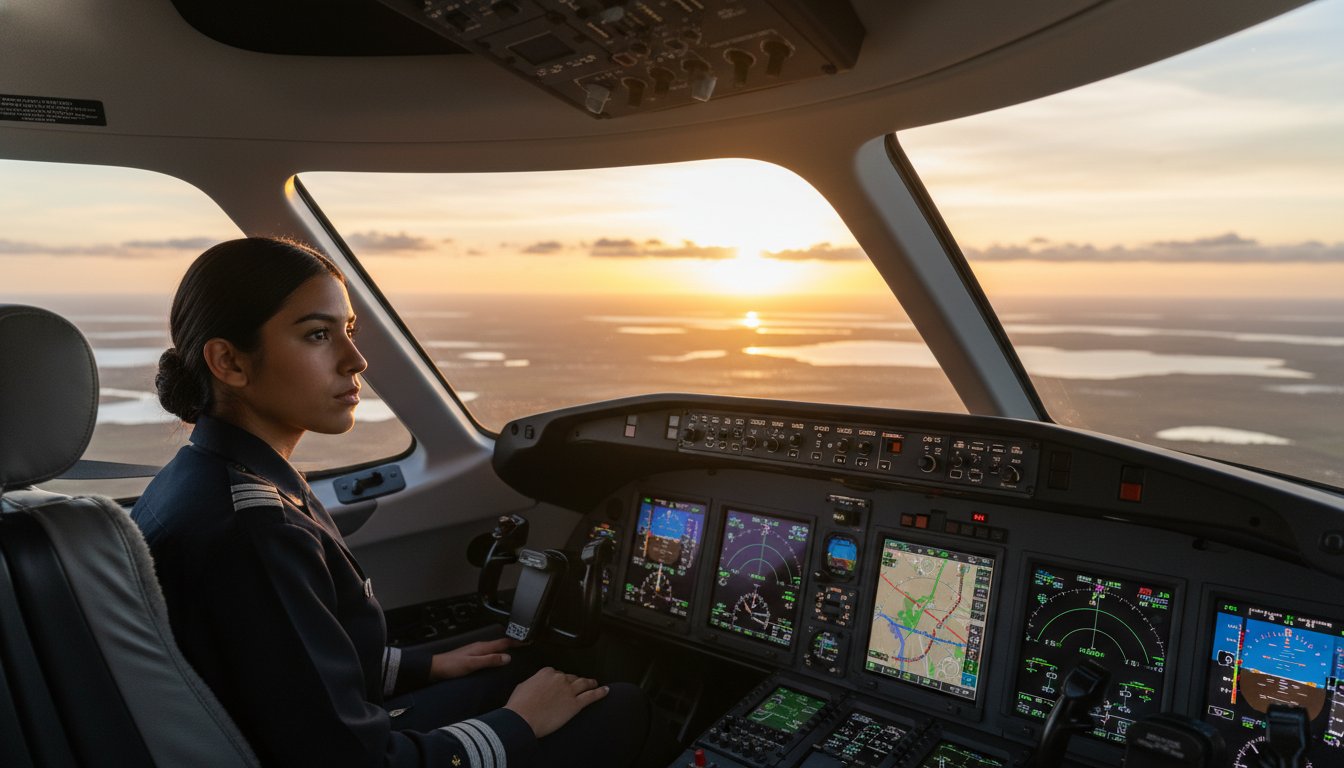
Logging 250 hours is easy; logging the right 250 hours strategically is what separates a student from a professional candidate. You know that reaching your commercial goals requires more than just circling the local airfield, but the maze of FAA regulations can make your logbook feel like a puzzle. It’s natural to feel overwhelmed by the distinction between Part 61 and Part 141 totals or worry about spending your budget on "empty" time that doesn't count toward your flight hours for CPL. We understand that every minute in the cockpit is an investment in your future career.
This guide will help you master specific FAA requirements, ensuring you hit every cross-country and night VFR milestone with precision. You'll find a clear checklist of mandated hours, cost-effective strategies to build your time, and a roadmap to transition from your checkride to your first professional seat. Whether you're eyeing our Career Pilot Program or the Airline Pilot Elite track, your journey to the flight deck starts with a smart plan for every hour logged.
Key Takeaways
- Understand the critical differences between Part 61 and Part 141 pathways to choose the most efficient route for your career timeline.
- Master the specific breakdown of pilot-in-command and cross-country flight hours for CPL required by the FAA to ensure every flight counts toward your checkride.
- Discover how leveraging regional weather advantages and cost-sharing strategies can significantly accelerate your logbook progression.
- Learn how training in Technically Advanced Aircraft (TAA) prepares you for modern airline cockpits while meeting the latest regulatory standards.
- Map out your transition from a commercial license to a first officer seat by bridging the experience gap through high-value professional roles.
Understanding the Total Flight Hours for CPL: Part 61 vs. Part 141
Choosing how to earn your commercial license is the most critical strategic decision you'll make in your early career. The FAA provides two distinct regulatory paths to reach your goals, and the "right" choice depends entirely on your personal schedule and professional aspirations. While both tracks lead to the same certificate, the difference in required flight hours for CPL can be as much as 60 hours. This gap represents a significant amount of time and resources that you could otherwise spend earning a paycheck in the cockpit. We want to help you navigate these options so you can launch your career with clarity and confidence.
The Part 61 Path: Flexibility and the 250-Hour Milestone
Part 61 training is often described as "experience-based." It offers a high degree of flexibility, making it the preferred choice for students who need to balance their training with a full-time job or family commitments. Under these regulations, you must log at least 250 hours of total flight time. This path allows you to work at your own pace and manage your own curriculum, but it requires a disciplined approach to ensure you're meeting all specific aeronautical experience requirements. You're the pilot in command of your schedule here, which is why many independent-minded students thrive in this environment. It's a great way to build confidence while maintaining your current lifestyle and slowly accumulating the necessary hours.
The Part 141 Path: Efficiency and the 190-Hour Certification
If your goal is to transition into a professional cockpit as quickly as possible, the "190-Hour Advantage" of a Part 141 program is hard to ignore. Because these programs follow a strictly FAA-approved syllabus and undergo regular oversight, the FAA allows you to graduate with only 190 total hours. This structured environment mirrors the training style you'll encounter at major airlines, helping you build professional habits from day one. When you enroll in our Career Pilot Program, you're stepping into a system designed for maximum efficiency. You'll follow a clear sequence of lessons that build upon each other, ensuring no hour in the logbook is wasted on purposeless flying.
Understanding the FAA pilot certification standards is essential for mapping out your journey. While Part 61 focuses on the end result, Part 141 focuses on the process. This structure is why many career-track students choose commercial pilot training within a 141 framework. It reduces the total flight hours for CPL required while providing a clear, milestone-driven path to your checkride. Ultimately, the best path is the one that gets you into the air with confidence, whether you value the freedom of Part 61 or the streamlined pace of Part 141. Your timeline and professional goals should lead the way as you decide which route fits your future best.
The FAA 61.129 Hour Breakdown: What Specific Time Do You Need?
Reaching your commercial checkride isn't just about hitting a magic number on your total time; it's about proving you have the specific experience to handle professional responsibilities. The FAA's detailed breakdown for flight hours for CPL ensures you've encountered various flight environments before you ever fly for hire. You need to demonstrate mastery over the aircraft while managing complex navigation and various weather conditions. According to the FAR 61.129 aeronautical experience requirements, your logbook must show a precise mix of command time and specialized training that prepares you for the high stakes of commercial aviation.
PIC and Cross-Country Requirements
The core of your commercial experience lies in your 100 hours of pilot-in-command (PIC) time. Within this total, you must log at least 50 hours of cross-country flight time in airplanes. Logging these hours correctly is vital. A common mistake is failing to verify that each leg meets the straight-line distance of more than 50 nautical miles from your original departure point. One of the most significant milestones is the "long cross-country" mission. This flight must cover at least 300 nautical miles total, including landings at three points. Crucially, one leg of this trip must consist of a straight-line distance of at least 250 nautical miles from the original departure point. If you're looking for a structured way to hit these milestones, our Career Pilot Program provides the mentorship needed to track every hour with professional accuracy.
Night and Instrument Training Standards
Professional flying doesn't stop when the sun goes down, so the FAA requires 10 hours of night flight training. This is typically split between 5 hours of solo (or PIC) night flight and 5 hours of dual instruction. You'll need to complete 10 takeoffs and landings at an airport with an operating control tower to satisfy the night requirement. Precision is the goal here. Additionally, you must log 10 hours of instrument training. Even if you already hold an instrument rating, these hours must be specific to the commercial maneuvers and standards. This training ensures you can maintain control and navigate solely by reference to instruments during the more demanding phases of commercial flight. By focusing on these specific mission types early, you'll avoid the "empty" hours that don't contribute toward your certification, keeping your training efficient and your career on the fast track.
How to Build Flight Hours Fast: Strategic Time-Building Tips
Reaching the required flight hours for CPL shouldn't feel like a slow grind. While many students view time building as a hurdle, successful pilots treat every hour as a strategic opportunity to refine their skills. Building time efficiently requires a combination of the right location, smart cost-sharing, and a mission-oriented mindset. By choosing a high-activity aviation hub and flying with purpose, you can significantly shorten your timeline while becoming a more competent pilot. Reference the AOPA commercial pilot guide to see how these practical strategies align with national standards for professional development.
Maximizing the Florida Weather Advantage
Training in Kissimmee and the greater Orlando area offers a distinct competitive edge. With over 300 days of sunshine each year, Central Florida allows for a consistent flight schedule that prevents "training rust." This lack of weather-related interruptions directly impacts how long does it take to become a commercial pilot, often shaving months off the process compared to northern climates. Additionally, the diverse and busy airspace near Orlando provides superior PIC experience. You'll regularly interact with various air traffic control facilities and navigate complex corridors, which builds the professional confidence you'll need on day one of your first job.
Cost-Effective Time Building Tactics
One of the most effective ways to manage your budget is the "Safety Pilot" strategy. By pairing up with another student, you can legally split the cost of the aircraft while one pilot flies under the hood and the other acts as a safety pilot. Both can log PIC time under specific FAA regulations, making it a powerful tool to accumulate flight hours for CPL without doubling your expenses. However, avoid the trap of just "boring holes in the sky." We encourage students to use "mission-based" flying. Instead of aimless local flights, plan trips that force you to practice commercial pilot maneuvers or navigate to unfamiliar airports. This approach ensures your logbook reflects quality experience rather than just quantity.
Planning your cross-country missions with a focus on networking can also pay dividends. Flying to regional hubs where charter companies or cargo operators are based allows you to see the industry in action and meet working professionals. If you want a structured path that combines these strategies with expert oversight, our Career Pilot Program is designed to keep you moving forward. We help you map out your hours so that every takeoff brings you closer to your professional goals in the most cost-effective way possible.
TAA vs. Complex Aircraft: Modernizing Your CPL Training
For decades, the path to a commercial certificate required logging time in a "complex" aircraft, which the FAA defines by its retractable landing gear, flaps, and controllable-pitch propeller. However, the aviation industry has evolved, and the FAA recognized this shift in 2018 by allowing students to complete their specialized training requirements in a Technically Advanced Aircraft (TAA). This update is a significant advantage for anyone building flight hours for CPL, as it prioritizes modern cockpit management over mechanical systems that are becoming increasingly rare in professional fleets. You can now focus your energy on mastering the technology you will actually use in your future career.
Defining TAA in the Modern Cockpit
A Technically Advanced Aircraft is an airplane equipped with an electronically advanced primary flight display (PFD), a multi-function display (MFD) that includes a moving map using GPS navigation, and an integrated two-axis autopilot. Glass cockpits have largely replaced complex trainers in professional flight schools because they offer higher reliability and better situational awareness for the pilot. We focus on these modern systems to help you meet your commercial training milestones with the same technology used by major carriers today. Using a TAA ensures your training is as efficient and safe as possible while you accumulate your required time.
Benefits of TAA for Future Career Opportunities
Training in a G1000-equipped aircraft prepares you for the transition to regional airlines far more effectively than an older retractable-gear trainer. You'll learn to manage a Flight Management System (FMS) and interpret complex data streams, which are core competencies for any modern first officer. While "complex" time was once a primary hiring metric, today’s recruiters look for proficiency in high-automation environments. Transitioning from a modern trainer to a regional jet is a natural progression when you've already mastered glass-panel avionics.
Maximizing your 10 hours of required TAA training ensures you graduate with the technical skills needed to excel in a professional environment. It’s about making your flight hours for CPL as relevant as possible to the job you want. Traditional complex trainers were the industry standard for years, but they are often aging and mechanically intensive. In contrast, TAA platforms provide a more stable and technologically rich environment that allows you to focus on high-level decision making. If you are ready to master the latest in aviation technology, enroll in our Airline Pilot Elite program and start building your future in a modern cockpit.
The Path to 1,500 Hours: What Happens After Your CPL?
Passing your commercial checkride is a monumental achievement, but for most aspiring airline pilots, it's the start of a new phase. While you've successfully navigated the required flight hours for CPL, you now face the "experience gap" between your 250-hour certificate and the 1,500-hour requirement for an Airline Transport Pilot (ATP) certificate. This period is where you truly refine your craft and transition from a student to a seasoned professional. We believe this time should be spent purposefully, building the kind of high-quality experience that makes you stand out to recruiters at the major airlines.
The CFI Route to the Airlines
Choosing to become a Certified Flight Instructor (CFI) is widely considered the gold standard for bridging the gap to 1,500 hours. Instructing allows you to get paid while building time, but the real value lies in the mastery you develop by teaching others. You'll find that explaining complex aerodynamic principles to a new student solidifies your own understanding in a way that solo flying never could. In the favorable Central Florida climate, a dedicated full-time instructor can often reach the 1,500-hour milestone in 12 to 18 months. Our Airline Pilot Elite program supports this path by guiding you through every instructor rating you need to become a leader in the cockpit.
Strategic Career Planning
If instructing isn't your primary interest, you can explore several alternative first jobs that welcome low-time commercial pilots. Aerial survey companies often hire pilots to fly long, precise patterns across the country, which is an excellent way to build cross-country and technical experience. You might also consider working as a jump pilot for skydiving centers or ferrying aircraft for maintenance and sales. These roles offer diverse challenges that build the decision-making skills necessary for a professional career. Networking within the Kissimmee aviation community is vital here; the connections you make at our local hangars often lead to these unique first-job opportunities.
As you plan your next steps, it’s helpful to view the commercial pilot license florida cost as a strategic investment in your future. The ROI on your training becomes clear as you transition from paying for flight hours for CPL to earning a salary as a professional pilot. Your journey is a structured process, and your commercial checkride is the gateway to a lifelong career. Stay focused on your ultimate destination, and remember that every hour logged is a step closer to the flight deck of a major carrier. We're here to act as your practical mentor, ensuring you have the tools and confidence to launch your professional life with success.
Launch Your Professional Pilot Career Today
Mastering the specific requirements for your commercial certificate is about more than just checking boxes; it's about building a solid foundation for a lifelong career. You now understand how to choose between the structured efficiency of Part 141 and the flexibility of Part 61, ensuring every hour in your logbook serves a professional purpose. By leveraging modern technology like our G1000-equipped TAA fleet and taking advantage of the year-round Florida sunshine, you can reach your flight hours for CPL with greater precision and speed. Your journey from a 250-hour commercial pilot to a 1,500-hour airline professional is a structured path that we're ready to walk with you.
Our professional Kissimmee-based training and mentorship-driven Career Pilot Program provide the expert guidance you need to navigate these milestones with confidence. We're deeply invested in your individual success as you transition from a student to a leader in the cockpit. Don't let the complexity of FAA regulations hold you back from your dreams. Start your journey toward 250 hours today with Aero Global Aviation Academy and take the first step toward your seat on the flight deck. The sky is waiting for you.
Frequently Asked Questions
How many flight hours do I need for a CPL under Part 61?
You need a minimum of 250 total flight hours to earn your Commercial Pilot License under Part 61 regulations. This total must include specific experience milestones, such as 100 hours in powered aircraft and 100 hours of pilot-in-command time. It's a popular route for those who appreciate a flexible, self-paced training environment while they work toward their professional goals.
Can I count my Private Pilot hours toward the Commercial Pilot License total?
Yes, every hour you logged during your Private Pilot and Instrument Rating training counts toward the total flight hours for CPL. Your logbook is a cumulative record of your experience, so those early hours in the pattern are just as valuable as your advanced commercial maneuvers. Starting with a strong foundation ensures that your progression toward 190 or 250 hours is steady and rewarding.
What counts as cross-country time for the CPL requirements?
Cross-country time for commercial certification generally requires you to land at an airport other than your point of departure. However, to meet the specific 50-hour cross-country requirement for the CPL, the flight must include a landing at a point more than 50 nautical miles straight-line distance from your original takeoff location. We help you plan these missions carefully so every flight contributes to your FAA requirements.
Do I need 250 hours if I train at a Part 141 flight school?
No, you can graduate with a Commercial Pilot License in as few as 190 hours if you're enrolled in an FAA-approved Part 141 program. These programs use a highly structured syllabus that the FAA recognizes as more efficient than the flexible Part 61 path. This 60-hour difference can save you significant time and allow you to start your professional flying career much sooner.
How much of my CPL training can be done in a flight simulator?
Under Part 61, you can credit up to 50 hours of qualified flight simulator or flight training device time toward your total flight hours for CPL. This training must be performed with an authorized instructor in a device that meets specific FAA certification standards. Using a simulator is a brilliant way to master complex procedures and emergency scenarios in a controlled, cost-effective environment before practicing them in the air.
Is it possible to build 250 flight hours in six months?
It's absolutely possible to reach 250 hours in six months if you fly consistently, averaging about 10 hours per week. Training in a region like Central Florida is a huge advantage because the reliable weather prevents the long delays often found in other climates. Many students in our Career Pilot Program reach this milestone quickly by treating their flight training like a full-time job.
What is the "long cross-country" requirement for the CPL?
The long cross-country is a specific mission that must cover at least 300 nautical miles total, with landings at a minimum of three points. One leg of this flight must be at least 250 nautical miles straight-line distance from the original departure point. It's an exciting milestone that tests your endurance and navigation skills, proving you're ready for the demands of professional cross-country flying.
Why is 1,500 hours often mentioned alongside the CPL 250-hour requirement?
While 250 hours earns you a commercial license, 1,500 hours is the standard requirement for the Airline Transport Pilot (ATP) certificate needed to fly for a major airline. Your CPL is the "license to learn" and earn; it allows you to get paid as a pilot while you bridge the gap to those higher hour totals. Most pilots spend the time between 250 and 1,500 hours working as flight instructors or in other commercial roles.


