

A thorough preflight isn’t a memory test. It’s a repeatable routine built around the aircraft you’re flying. This student pilot preflight inspection guide explains how to prepare and follow the correct checklist, even when unfamiliar components or aviation terms make the process feel daunting. You don’t need to know everything on day one, but you do need to use the correct checklist and ask when something isn’t clear.
It’s normal to worry about missing a step, overlooking a possible defect, or holding up a lesson. A steady, aircraft-specific process helps you keep your place, follow the sequence, and notice when something needs your instructor’s attention. If an item seems damaged, unusual, or different from what the checklist describes, pause and ask instead of guessing or moving on.
In this guide, you’ll learn how to prepare, work through the checklist, report concerns, and bring useful questions to your instructor. You’ll also see how these habits fit into flight training in Kissimmee and Orlando, where every preflight is an opportunity to build aircraft knowledge and sound judgment.
Key Takeaways
- Use the checklist for the aircraft you’re assigned, and follow its sequence instead of relying on memory.
- This student pilot preflight inspection guide explains how to prepare, inspect methodically, and recognize when something needs a closer look.
- If you notice a discrepancy, report what you observed to your instructor. Diagnosing the issue isn’t your job as a student.
- Before a Kissimmee or Orlando lesson, review assigned material and check current approved weather information with your instructor.
- Build consistency through repetition and feedback, while remembering that preflight is one part of broader flight preparation.
What Is a Student Pilot Preflight Inspection, and Why Does It Matter?
A preflight inspection is a systematic, aircraft-specific check completed before flight, using the aircraft’s checklist and applicable operating information. It helps you become familiar with the airplane’s condition and identify anything that may need your instructor’s attention. It can’t guarantee that every defect will be found or that an aircraft is defect-free.
A preflight inspection is a checklist-led examination of an aircraft before flight, not a casual walkaround based on appearance or memory. A walkaround may be part of the process, but an inspection follows the checks and sequence specified for that aircraft. A Preflight checklist also explains why structured checks support flight safety. This student pilot preflight inspection guide offers context for the routine, but it never replaces the aircraft checklist or your instructor’s direction.
What does a student pilot learn during a preflight?
Each inspection is a chance to get to know the aircraft. You learn its layout, the names of its components, and what each checklist item asks you to observe. Your instructor can demonstrate the approved process, explain unfamiliar terms, and guide you as you practise the same sequence. If you don’t know what an item does, ask. A question is safer and more useful than a guess.
At first, the routine may feel like a collection of unfamiliar details. With guided repetition, you’ll begin to understand where to look, what the checklist is asking you to notice, and when to pause for help. The goal isn’t to rush or appear experienced. It’s to develop careful habits while learning how this particular aircraft is arranged.
Why use the aircraft-specific checklist every time?
Aircraft can differ in equipment, procedures, and checklist details. Even when two aircraft seem similar, don’t assume their checks are interchangeable. Use the checklist approved for the aircraft you’re assigned and consult its applicable operating information. This guide provides context, not a universal sequence. Examples elsewhere in the article shouldn’t be treated as instructions for every airplane.
Work through each item as written, and follow your instructor’s guidance if you’re unsure how to complete a check. Avoid skipping ahead or substituting memory for the checklist, especially as a beginner. A consistent, aircraft-specific routine makes it easier to notice when something seems unfamiliar and gives you a clear point to discuss with your instructor. That discipline supports the foundational knowledge you’ll build throughout flight training.
How to Follow an Aircraft Preflight Inspection Checklist
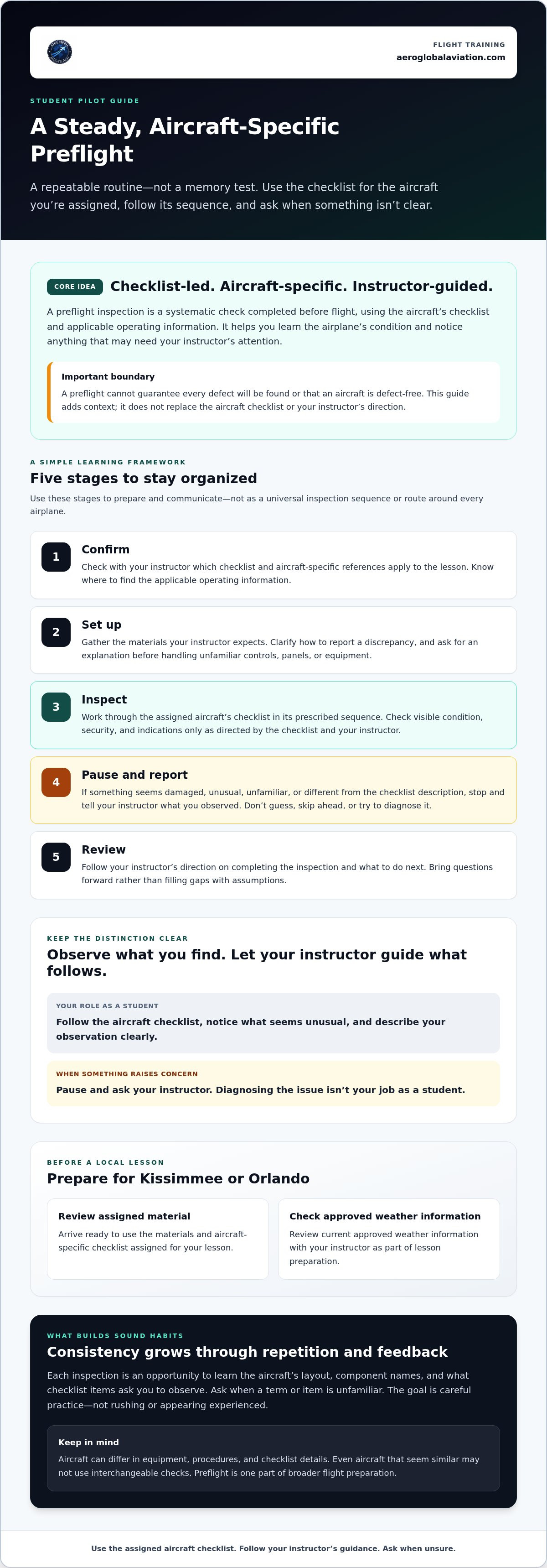
A checklist gives your inspection structure, but the correct steps depend on the aircraft and your instructor’s direction. The aircraft checklist and your instructor govern the inspection; this guide is only a learning aid. Use the framework below to prepare and stay organized, not as a substitute checklist or a route to follow around every airplane.
Prepare before beginning the walkaround
Before approaching the aircraft, confirm with your instructor which checklist and aircraft-specific references apply to the lesson. Gather the materials you’ve been asked to use, and ask how your instructor wants you to report a discrepancy. If a step or component is unfamiliar, get an explanation before touching controls, panels, or other equipment.
It can help to think through the process in stages:
- Confirm: Make sure you have the correct checklist and know where to find the applicable operating information.
- Set up: Gather the materials your instructor expects and clarify how to communicate observations.
- Inspect: Work through the aircraft checklist in its prescribed sequence, checking only what each item directs you to check.
- Report: Pause and bring anything unfamiliar or concerning to your instructor’s attention before continuing.
- Review: Follow your instructor’s direction on completing the inspection and what to do next.
Move through the aircraft systematically
Follow the checklist’s sequence instead of inventing a route, jumping between items, or relying on memory. A consistent pace makes it easier to keep track of the item you’re checking and what comes next. AOPA’s preflight inspection tour can provide useful background, but any general example remains secondary to the checklist and references for your assigned aircraft.
Observe visible condition, security, and indications only as directed by the checklist and your instructor. If something looks different from what you expected, describe what you noticed in plain language. For example, report that a component appears loose or that you see an unfamiliar mark. Don’t decide what caused it, whether it affects airworthiness, or how it should be repaired. Leave those assessments and next steps to the appropriate instructor or qualified personnel.
That distinction is central to a student pilot preflight inspection guide: your role is to follow the procedure attentively and communicate observations, not to diagnose or authorize repairs. Building that discipline with instructor feedback is part of structured flight training. If you’re exploring training in the Kissimmee and Orlando area, you can learn about local pilot training and the training options available.
What Should You Do If the Inspection Reveals a Concern?
Stop and tell your instructor. As a student, you don’t need to diagnose a condition, decide whether it makes the aircraft airworthy, or work out a repair on your own. Your responsibility is to notice what seems unusual, communicate it clearly, and wait for direction before continuing.
There’s an important difference between an observation and an airworthiness decision. “I see fluid beneath this area” describes what you noticed. Identifying its source or deciding whether the aircraft can fly requires further evaluation. The FAA’s FAA preflight inspection guide offers background on systematic inspection, but it doesn’t replace the aircraft’s applicable checklist, your instructor’s guidance, or an authorized assessment.
How should a student report a discrepancy?
Be specific and factual. Identify where you noticed the concern and describe what you can see, hear, or observe without guessing at its cause. If it’s safe and your instructor directs you to, show them the item. Then follow their instructions. Don’t touch, adjust, or attempt to repair anything unless you’re specifically directed and authorized to do so.
A lesson taking longer or being delayed while a concern is assessed is better than ignoring an unresolved observation. Pausing is part of learning sound judgment. You’re not holding up training by speaking up; you’re giving your instructor information needed to determine the appropriate next step.
Can a student pilot decide an aircraft is safe to fly?
A checklist helps you carry out the inspection, but completing it doesn’t by itself establish airworthiness or authorize a flight. Under 14 CFR § 91.7, a civil aircraft may not be operated unless it’s airworthy, and the pilot in command is responsible for determining whether it’s in condition for safe flight. As a student, don’t treat an unfamiliar finding as a decision you must make alone. Bring it to your instructor, who can assess the situation and involve qualified, authorized maintenance personnel when needed.
Keep your report simple:
- Pause the inspection when something appears abnormal or you’re unsure what you’re seeing.
- Describe the location and visible observation without offering a diagnosis.
- Show your instructor and follow their direction before proceeding.
That is the practical lesson at the heart of a student pilot preflight inspection guide: notice carefully, communicate promptly, and leave airworthiness and maintenance decisions to the people responsible for making them.
How Can You Prepare for a Preflight in Kissimmee or Orlando?
Some preparation before you reach the aircraft can help keep your lesson focused. Confirm the lesson details, review the material your instructor assigned, and bring questions about anything you don’t understand. In Kissimmee and Orlando, weather and ground conditions can vary, so include a current weather review in your preparation and follow your instructor’s guidance about what information to check.
What should you review before arriving at the aircraft?
Start with the checklist and aircraft materials assigned for the scheduled flight. Don’t replace them with a generic checklist found online: procedures and equipment can differ, and your instructor will direct you to the references that apply. As you review, note unfamiliar terms or items you’d like to discuss. A short question list can make preflight a more active learning opportunity.
- Confirm the lesson details and the aircraft you’re scheduled to use.
- Review instructor-assigned materials and the applicable checklist.
- Write down questions instead of guessing at unfamiliar terminology.
- Arrive ready to follow your instructor’s direction and discuss what you’ve reviewed.
If you’re mapping out the broader training journey, this Florida private pilot license guide provides context on the path toward a Private Pilot License. Use it to support your general understanding, not as a replacement for lesson-specific instruction.
How does local weather affect lesson preparation?
Central Florida conditions can vary. Heat, rain, visibility, and thunderstorms may affect how a lesson is planned, but a general article can’t tell you what conditions you’ll encounter on a particular day. Check the current approved weather information your instructor directs you to review, and discuss anything you’re unsure how to interpret. Conditions can change, so stay open to your instructor’s guidance on lesson decisions.
Weather preparation is part of learning to think ahead, not a test of whether you can make every decision alone. Ask how current conditions relate to the planned lesson and what information your instructor wants you to monitor. If you’re comparing training environments, the Florida flight school evaluation checklist can help you consider how instruction and local context fit your goals.
To learn about structured flight training in the area, explore pilot training in Kissimmee and Orlando.
Build Safe Preflight Habits Through Structured Flight Training
Confidence comes from learning the routine, practising it consistently, and getting feedback when you’re unsure. A checklist shouldn’t become a race to finish or a test of how much you can remember. Treat each preflight as an opportunity to understand the aircraft-specific steps, ask questions, and strengthen the careful habits you’ll use throughout pilot training.
How does instructor guidance strengthen inspection skills?
Your instructor can explain what a checklist item asks you to observe and correct misunderstandings before they become habits. Speak up if a term is unfamiliar, you’re uncertain about what you see, or a step doesn’t make sense. Questions are part of learning. With practice and feedback, you can become more consistent while continuing to use the aircraft’s checklist and follow your instructor’s direction.
Preflight matters, but it’s only one part of flight preparation. It doesn’t replace learning how to prepare for a flight more broadly, develop sound judgment, or build the knowledge and skills required as training progresses. A careful inspection is a foundational habit, not proof by itself that a student is ready for every flight or situation.
Where does preflight fit into the PPL journey?
For students working toward a Private Pilot License, inspection practice connects aircraft familiarity with the disciplined approach pilot training requires. Aero Global Aviation Academy’s Wings Foundation is its PPL-focused training course. Students considering a professional direction can also read the Kissimmee and Orlando career pilot program guide for a broader look at that pathway.
Keep building one step at a time: follow the assigned procedures, ask when something is unclear, and use instructor feedback to make your routine more reliable. If you’re considering flight training in Kissimmee and Orlando, explore Aero Global Aviation Academy and ask which training option may suit your goals.
Make Every Preflight a Step Toward Confident Flying
A strong routine isn’t about memorizing a sequence or judging every aircraft condition on your own. Use the aircraft-specific checklist, move through it methodically, and tell your instructor when something is unclear or seems unusual. Those habits make each preflight a practical learning opportunity.
This student pilot preflight inspection guide is a starting point, not a substitute for your aircraft’s procedures or instructor direction. Preflight is one part of broader flight preparation, and confidence grows through practice, questions, and feedback.
Aero Global Aviation Academy serves students in the Kissimmee and Orlando area. Its Wings Foundation focuses on Private Pilot License training, where disciplined habits support a strong foundation for learning to fly. If you’re considering your next step, explore flight training with Aero Global Aviation Academy and ask about the training options that fit your goals.
Stay curious, follow the checklist, and keep building your skills one careful step at a time.
Frequently Asked Questions
What is included in a student pilot preflight inspection?
A student pilot preflight inspection is a systematic check of the assigned aircraft, guided by its checklist and your instructor. The checklist directs you to observe specific areas, components, and indications for that aircraft. Items and sequence can vary, so this student pilot preflight inspection guide isn’t a universal checklist. Use the applicable aircraft procedures, and ask your instructor to explain unfamiliar components or terms.
Do student pilots have to use a checklist before every flight?
Students should follow the checklist and procedures specified for each aircraft and their training. A checklist organizes the inspection so you’re not relying on memory, but requirements and procedures can depend on the aircraft and operating context. Ask your instructor which checklist applies and how to use it. Don’t skip items or assume a checklist for a different aircraft is suitable, even if the aircraft appears similar.
What should I do if I find something wrong during a preflight?
Stop and notify your instructor about what you observed. Describe the location and visible condition clearly, without guessing at a cause or trying to diagnose or repair it. If directed, show the instructor the item and follow their guidance. Don’t continue as though the concern is resolved until it has been assessed. A delayed lesson is preferable to ignoring an unresolved observation or making an airworthiness decision alone.
Can a student pilot perform a preflight inspection alone?
Whether you conduct any part of an inspection independently depends on your training, the aircraft, and your instructor’s direction. As a student, confirm which checklist to use and what you’re expected to do before beginning. An inspection doesn’t make you responsible for diagnosing discrepancies or deciding alone that the aircraft is safe to fly. Ask for supervision or clarification whenever you’re uncertain, and follow the applicable procedures.
How long does a student pilot preflight inspection take?
There isn’t one reliable duration for every student preflight. The time can vary with the aircraft, its checklist, your familiarity with the procedure, and whether you pause to ask questions or report a concern. Don’t rush to meet an assumed time target. Follow the checklist at a careful pace and ask your instructor how much time to allow before the lesson so preparation doesn’t feel hurried.
What should I review before a flight lesson in Central Florida?
Confirm your lesson details, review the materials and checklist your instructor assigned for the scheduled aircraft, and note questions you want to discuss. Also check the current approved weather information your instructor directs you to review. Conditions around Kissimmee and Orlando can vary, and heat, rain, visibility, or thunderstorms may affect planning. Your instructor will guide lesson decisions as conditions change, so don’t rely on an old forecast or assumptions.
Does a preflight checklist guarantee an aircraft is airworthy?
No. A checklist supports a systematic inspection, but it can’t guarantee that every defect will be found or independently establish that an aircraft is airworthy. Under 14 CFR § 91.7, a civil aircraft may not be operated unless it’s airworthy, and the pilot in command is responsible for determining whether it’s in condition for safe flight. If you notice something concerning, report it to your instructor rather than making that decision alone.
Can I use an online preflight checklist instead of the aircraft checklist?
No. Don’t substitute a generic online checklist for the checklist and operating information applicable to the aircraft you’re assigned. Equipment and procedures can differ, even between aircraft that look alike. Online material may help you understand general concepts, but it isn’t a replacement for instructor-assigned references or direction. Confirm the correct checklist with your instructor, follow its sequence, and ask before applying information from another source.


