
What if your fresh Commercial Pilot License was more than just a certificate of achievement, but a high-speed ticket into one of the most active aviation hubs in the world? You've likely heard that the 1,500-hour "low-hour hurdle" is an impassable wall, especially as the 2026 hiring market returns to a traditional cycle. It's frustrating to finish flight school only to realize the regional airlines still feel a thousand hours away. Finding pilot jobs for new CPL holders Florida doesn't have to be a waiting game defined by financial pressure. You're standing in a state where the climate and the industry infrastructure work in your favor every single day.
We understand the urgency of wanting to trade the student headset for a professional paycheck immediately. This guide provides the most effective strategies to bridge the gap between your 250-hour checkride and the restricted ATP minimums. You'll discover how to leverage local opportunities in the Orlando and Kissimmee area, from the reliable CFI path to specialized roles like aerial surveying or banner towing. We'll outline a clear timeline to reach your 1,500-hour goal while building a powerful professional network right here in Central Florida.
Key Takeaways
- Identify specific 250-hour roles and learn how to secure pilot jobs for new CPL holders Florida in a normalizing 2026 market.
- Uncover the hidden job market at Central Florida hubs like Kissimmee Gateway Airport where face-to-face networking beats online applications.
- Evaluate the Certified Flight Instructor path as a strategic bridge to 1,500 hours and see why airlines prioritize instructional experience.
- Optimize your professional pilot resume for local operators by focusing on the specific flight times and ratings they value most.
- Discover how the Airline Pilot Elite program provides a clear, structured roadmap from your initial license to a professional flying career.
The Low-Hour Hurdle: Navigating the Florida Pilot Market in 2026
Earning your Commercial Pilot License (CPL) is a monumental achievement, but for many, the celebration is quickly met with a sobering reality. In the aviation industry, you're now classified as a "low-hour pilot." This status typically covers those with 250 to 500 total flight hours. It's a challenging phase where you have the legal right to fly for compensation, yet you haven't reached the 1,500-hour threshold required for most airline roles. Securing pilot jobs for new CPL holders Florida requires a shift in mindset from "training" to "networking."
The 2026 hiring market has returned to a more traditional cycle. While major carriers like Delta and United still plan to hire thousands of pilots this year, regional airlines are becoming more selective. They prioritize candidates who have reached their 1,500-hour Airline Transport Pilot (ATP) minimums or those coming from highly structured academy environments. This doesn't mean your career is on hold. It means you need a tactical plan to bridge the gap. You aren't just looking for a job; you're looking for the right hours to make your resume irresistible to the majors.
Why Florida is the Best Place for Your First Job
Why Florida is the Best Place for Your First Job
The "1,500-hour rule" is the primary regulation governing the FAA pilot certification process for airline-bound aviators. These "Gap Years" between your 250th and 1,500th hour are where you refine your decision-making and technical precision. Every hour you log now should build upon the solid foundation you created during your commercial pilot training. Whether you are flying cargo or instructing students, these hours are not just a countdown; they are the professional seasoning that prepares you for the high-stakes environment of a regional cockpit.
Transitioning from a student to a professional is a structured, attainable process. By focusing on the unique opportunities within the Florida market, you can turn the low-hour hurdle into a period of rapid professional growth. You have the license; now it's time to put it to work in the most pilot-friendly environment in the country.
Entry-Level Opportunities for New CPL Holders in Florida
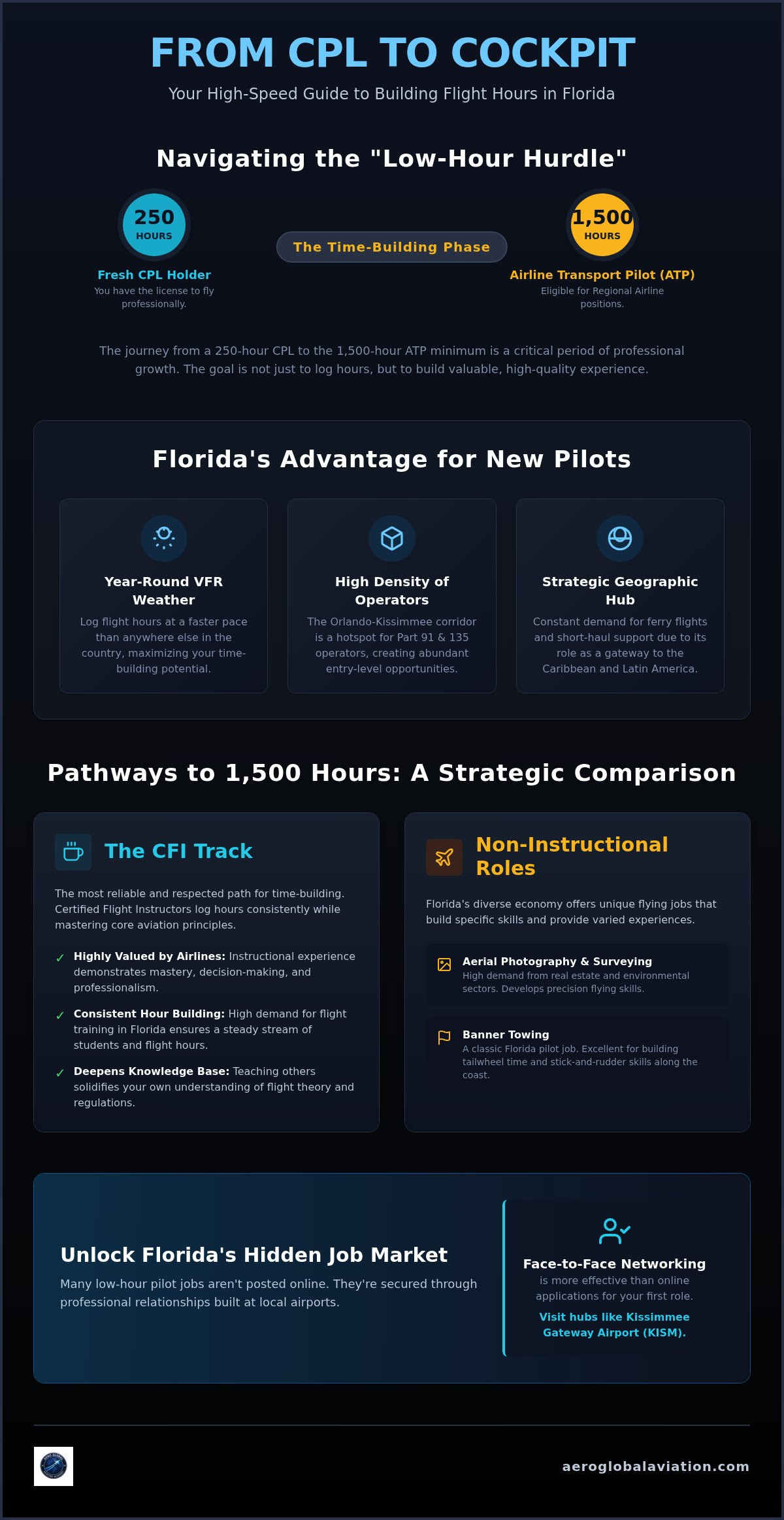
Landing that first paycheck after flight school feels like a definitive victory. While the major airlines are your long-term goal, there's a vibrant ecosystem of pilot jobs for new CPL holders Florida that legally only require 250 hours and a commercial certificate. These positions aren't always found on major job boards; they're often hidden in plain sight at local hangars. Time building is the primary objective of these early roles. You're trading your skills for the flight hours you need to reach the next milestone.
Operators in this space place a high premium on your training history. A clean checkride record is often more important than having a few extra hours, as it demonstrates the discipline and safety mindset they need. According to official data on the pilot job outlook, the industry needs over 18,000 new pilots annually through 2034. This demand trickles down to small operators who need reliable CPL holders to keep their missions running. If you're looking to sharpen your professional profile before applying, exploring advanced pilot training paths can give you a significant competitive edge with these local employers.
Non-Instructional Flying Jobs
Florida's unique geography and economy create specialized roles that are perfect for low-hour pilots. Aerial photography and mapping are in high demand due to the state's constant real estate development and environmental monitoring needs. If you enjoy coastal flying, banner towing is a classic Florida "beach" job. It's excellent for building significant tailwheel experience and refining your stick-and-rudder skills in a high-workload environment. For those who want high-frequency takeoffs and landings, working as a jump pilot for skydiving operations allows you to build rapid cycles and gain experience in high-performance aircraft.
Second-in-Command (SIC) Opportunities
Another strategic path is seeking Second-in-Command roles. Many Part 135 charter operators use King Airs or light jets and occasionally hire low-hour pilots to fly as a co-pilot. While some competitors suggest these roles are easy to find, the reality is that insurance minimums can be strict. This is why being physically present at airports like Orlando Executive (KORL) or Kissimmee Gateway (KISM) is vital. Corporate flight departments and air ambulance support services also operate out of these hubs. While they often look for more experience, they sometimes offer entry-level support roles that put you in the cockpit alongside seasoned captains, providing invaluable mentorship and networking opportunities.
The CFI Track vs. Alternative Time-Building: A Strategic Comparison
Choosing your time-building strategy is the most critical decision you'll make after passing your CPL checkride. While we've previously explored various entry-level roles, the Certified Flight Instructor (CFI) rating stands alone as the most reliable bridge to the airlines. Most pilot jobs for new CPL holders Florida focus on repetitive tasks, but instructing forces you to master every maneuver from the right-hand seat. The FAA provides foundational guidance on how to become a pilot, but your journey from 250 to 1,500 hours is where you truly develop the professional identity that regional carriers desire.
Airlines don't just look at the total number in your logbook; they analyze the quality of those hours. Instructional time is highly regarded because it proves you can manage a cockpit, communicate complex concepts, and maintain safety while another pilot is at the controls. This mastery of communication is essential, especially for those who eventually seek to fly in international markets where language proficiency is a key asset; schools like Learning Explorer help professionals prepare for the linguistic demands of global aviation hubs. It's a level of responsibility that far exceeds basic time-building. If you're hesitant because you "don't want to teach," consider that explaining a crosswind landing to a struggling student is the fastest way to achieve total mastery yourself. You aren't just building time; you're building authority.
The Pros and Cons of Flight Instructing
Instructing offers a pace of hour accumulation that other roles simply can't match. In Florida's consistent flying environment, a dedicated CFI can log 80 to 100 hours per month. This path deepens your technical knowledge and provides built-in networking as you interact with other professionals daily. However, it does require a high level of responsibility and the pursuit of additional ratings like the CFII or MEI. Our Airline Pilot Elite program is specifically designed to facilitate this transition, moving you efficiently from a fresh commercial pilot to a respected instructor. For a detailed breakdown of these certifications, see our guide to advanced flight training.
Comparing the Paths to 1,500 Hours
When you compare the CFI track to alternatives, the strategic efficiency is clear. A flight instructor in Central Florida can typically reach the 1,500-hour mark in 12 to 18 months of steady work. Compare this to the aerial survey path, which is often seasonal and frequently requires you to travel out of state for months at a time. Banner towing is a classic choice, but it's largely restricted to daylight hours and coastal regions, making your schedule vulnerable to specific weather windows. While these alternative pilot jobs for new CPL holders Florida build excellent stick-and-rudder skills, they rarely offer the year-round consistency or the professional seasoning that makes a candidate stand out during a regional airline interview.
Networking and Application Strategy for Central Florida
While online portals are convenient, the aviation industry in Central Florida still thrives on handshakes and face-to-face rapport. To secure the most competitive pilot jobs for new CPL holders Florida, you must step out of the digital world and onto the ramp. "Hangar knocking" remains a vital tradition at Kissimmee Gateway Airport (KISM) and Orlando Executive (KORL). It’s about building a presence where the planes are. You want to be the first person a Chief Pilot thinks of when a seat unexpectedly opens up.
Your pilot resume should be a concise, surgical strike. Chief Pilots are busy; they don't want to read a multi-page biography. Keep your resume to a single page and place your total flight times, specific ratings, and high-performance endorsements at the very top. This clarity allows an operator to instantly verify if you meet their insurance minimums. Beyond the paperwork, leverage local FAA safety seminars through the WINGS program. These gatherings are excellent for professional development, but their true value lies in the networking. They are often attended by the very people who make hiring decisions for local Part 135 and Part 91 operations. To stay ahead of the competition, you should visit at least three local FBOs in person per week to distribute resumes and check in with staff.
Leveraging the Kissimmee (KISM) Aviation Hub
Kissimmee (KISM) is a unique powerhouse for aviation activity, hosting a variety of charter operators and specialized flight services. Being a "local" student at a Kissimmee-based academy provides a significant hiring advantage. You aren't just another name on a screen; you're a familiar face on the taxiway. Don't underestimate the value of networking with maintenance crews and fuelers at the FBOs. These professionals are the eyes and ears of the airport. They often know which companies are expanding or which pilots are moving on to the airlines long before a job listing is ever drafted. Building a friendly relationship with the ground crew can provide the "inside track" you need.
Optimizing Your Digital Presence
While physical networking is your primary tool, your digital footprint serves as your professional validation. Use LinkedIn strategically to connect with local Chief Flight Instructors and operations managers. Instead of a generic "add," send a brief, professional note expressing your interest in their operation. Joining Florida-specific pilot groups on social media is another excellent way to find "low-hour" leads that never hit the major job boards. Always keep a digital logbook updated and synced on your mobile device. In the fast-paced world of Florida aviation, an informal conversation at an FBO can quickly turn into an "on-the-spot" interview. Having your flight times ready for instant verification shows a level of preparedness that impresses employers. Ready to start building your professional network in the heart of Florida's aviation corridor? Connect with our team at Aero Global and gain the local advantage you need to launch your career.
Bridging the Gap with Aero Global's Airline Pilot Elite
Finding pilot jobs for new CPL holders Florida can feel like a full-time occupation in itself. While the "low-hour hurdle" is a reality of the 2026 market, it doesn't have to be a period of stagnation or financial stress. Our Airline Pilot Elite program acts as the ultimate career accelerator, specifically engineered to transform you from a fresh commercial pilot into a seasoned professional instructor. We believe your professional goals aren't just dreams; they're tangible destinations that require a precise flight plan to reach.
Training at our Kissimmee Gateway Airport (KISM) facility provides a strategic advantage that few other locations can match. You'll gain experience in high-traffic volume and navigate complex airspace daily, building the situational awareness that airline recruiters prioritize. This environment ensures that when you do reach that 1,500-hour mark, you aren't just a pilot with time; you're an aviator with the technical sophistication required for modern flight decks. You'll develop the confidence to handle the high-stakes nature of technical flying while enjoying the supportive culture of a dedicated local partner.
From Student to Staff: The Aero Global Advantage
One of the most direct ways we help you secure pilot jobs for new CPL holders Florida is through our internal hiring pipeline. We offer opportunities for our top graduates to join the Aero Global instructional team, allowing you to build your hours in a familiar, supportive environment. Our career pilot program is about more than just passing checkrides; it's about developing the "Elite" mindset that the industry demands. You'll receive personalized guidance on the airline pilot career path from mentors who have successfully navigated the same transition you're making now.
Next Steps: Your First Professional Rating
Your professional portfolio truly begins with the CFI and CFII ratings. These aren't just additional certificates; they're the keys to your first professional flying role. By mastering these instructor ratings, you demonstrate a level of command and communication that sets you apart from the average applicant. We invite you to schedule a tour of our Kissimmee facility to meet our team and discuss a customized career timeline that fits your specific aspirations. Don't leave your progress to chance when you can follow a proven roadmap to success. Take the next step in your professional career with Aero Global Aviation and start logging the hours that will define your future.
Take Command of Your Aviation Future in Florida
Your transition from a fresh commercial pilot to a regional airline cockpit is a structured, attainable process that starts with a clear strategy. We've explored how pilot jobs for new CPL holders Florida are often found through face-to-face networking at local hubs and why the CFI path remains the most strategic bridge to your 1,500-hour goal. By leveraging Central Florida's unique aviation ecosystem and year-round flying weather, you can transform these gap years into a period of rapid professional growth and technical mastery.
Aero Global Aviation Academy is here to serve as your dedicated local partner, providing expert mentorship and structured PPL to Instructor tracks at our Kissimmee Gateway Airport (KISM) facility. You've done the hard work of earning your license; now it's time to put it to work in the most pilot-friendly environment in the country. Don't wait for the perfect opportunity to appear on a job board. Launch Your Professional Career with Aero Global Aviation Academy today and turn your professional goals into tangible destinations. We're ready to help you log the hours that will define your future in the skies.
Frequently Asked Questions
What is the best pilot job for a 250-hour CPL holder in Florida?
The most strategic and reliable role for a 250-hour pilot is becoming a Certified Flight Instructor. This position allows you to master technical maneuvers while logging hours at a rapid pace. At Aero Global, our Airline Pilot Elite program transitions you directly into this professional role. It provides the steady income and instructional experience that regional airlines prioritize, making it the premier choice for pilot jobs for new CPL holders Florida.
Can I get hired by a regional airline with just a CPL?
Legally, you cannot fly for a regional airline with just a CPL; you must hold an Airline Transport Pilot (ATP) certificate, which requires 1,500 flight hours. The 2026 hiring environment has normalized, meaning airlines are strictly adhering to these federal minimums. While you can't jump straight to the airlines, your CPL allows you to work as a professional pilot in Part 91 or Part 135 operations to build that necessary experience.
How much do entry-level pilots make in Florida?
Entry-level salaries vary significantly based on the specific role you secure. As of August 2026, the average salary for a Certified Flight Instructor in Florida is approximately $43,418 per year. Once you reach the 1,500-hour milestone and transition to a regional airline, entry-level salaries in Florida typically start around $135,628. This significant jump in compensation makes the initial time-building phase a rewarding investment in your long-term professional success and financial stability.
Is it better to build hours as a CFI or a banner tower?
While banner towing builds excellent stick-and-rudder skills, flight instructing is generally the superior path for career advancement. Airlines value the quality of hours gained through teaching, as it demonstrates leadership, mastery of regulations, and complex decision-making. Instructing also offers year-round consistency in Florida's climate. Banner towing is often seasonal and limited by coastal weather, making it a less predictable way to reach your 1,500-hour goal compared to a structured instructor role.
What flight schools in Orlando help with job placement?
Aero Global Aviation Academy in Kissimmee specializes in bridging the gap between certification and employment. Our Airline Pilot Elite program is specifically designed to move you from a student to a professional instructor. We frequently hire our top graduates to join our instructional team at KISM, providing a direct path to build hours. This internal pipeline ensures you aren't just another applicant searching for pilot jobs for new CPL holders Florida without a plan.
How long does it take to reach 1,500 hours in Florida?
In Florida's favorable flying climate, a dedicated pilot can typically reach 1,500 hours within 12 to 18 months of full-time instructing. By logging between 80 and 100 hours per month, you create a steady momentum that northern pilots often struggle to match. This efficiency is one of the primary reasons the Orlando-Kissimmee area is considered a global hub for professional pilot development, allowing you to reach your airline career goals much faster.
Do I need a multi-engine rating for my first pilot job?
You don't strictly need a multi-engine rating for entry-level jobs like single-engine flight instructing or banner towing. However, it's a vital component of your professional portfolio if you want to fly as a Second-in-Command for charter operators or move to the airlines. Most professional tracks, including our Career Pilot Program, integrate multi-engine training to ensure you're qualified for the widest possible range of local flying opportunities in the competitive Florida market.


