

What if feeling worn down in flight school is a signal to adjust your training pace, not proof you can’t become a pilot? Dealing with burnout in flight school can be especially hard when lessons, ground study, work, finances, and family responsibilities all compete for your attention. A difficult lesson or stalled milestone may add to the pressure, but it doesn’t define your ability or long-term goal.
It’s reasonable to wonder whether you’re simply tired or whether your routine is affecting your learning and wellbeing. This guide covers practical signs of training-related strain, ways to review your study and flying routines, and when to seek qualified health or aviation guidance before a lesson. You’ll also find ways to discuss your progress and break a long-term goal into manageable next steps.
Understanding what’s draining your energy can help you protect safety, rebuild momentum, and decide whether to continue at a different pace. A structured training pathway can make milestones easier to see while leaving room to reassess how you’re getting there.
Key Takeaways
- Notice recurring changes in focus, energy, or confidence without treating them as a diagnosis or a verdict on your ability.
- Consider how training demands, outside responsibilities, and unrealistic expectations can combine to make progress feel harder.
- When dealing with burnout in flight school, look for patterns over time to distinguish a temporary setback from ongoing strain.
- Bring specific examples and questions to a conversation about lesson readiness or training pace with your instructor.
- Use clear milestones to choose a sustainable next step and keep your pilot goal within reach.
Dealing With Burnout in Flight School: Recognize the Signs Without Self-Diagnosing
A demanding stretch of flight training can feel discouraging. A challenging maneuver, disappointing lesson, or milestone that takes longer than expected may shake your confidence, but none of these alone defines your ability to become a pilot. Dealing with burnout in flight school starts with noticing what’s changing rather than rushing to label yourself.
Burnout is often used to describe sustained physical or emotional strain connected to ongoing demands. It isn’t a diagnosis you can make from one bad day, and this article can’t determine what you’re experiencing. The overview of Occupational burnout offers general background, but your experience needs to be understood in context. Ordinary nerves before a lesson may ease once you’re prepared and in the routine. Persistent exhaustion, detachment, or trouble concentrating deserves closer attention, especially if it continues across lessons and other parts of life.
How can a student pilot recognize persistent training strain?
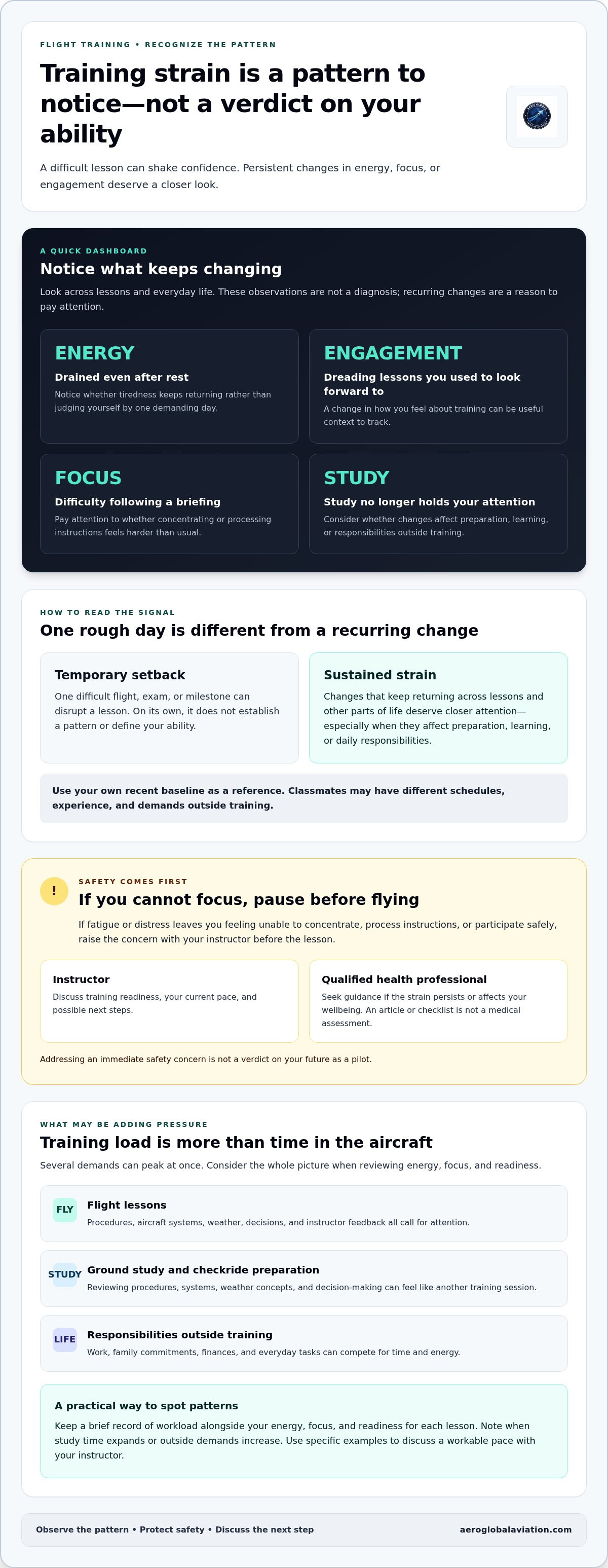
Look for patterns rather than judging yourself by one rough performance. You might feel drained even after rest, dread lessons you previously looked forward to, struggle to follow a briefing, or find that studying no longer holds your attention. These signs can have different causes, so treat them as observations, not proof of burnout.
One difficult flight or exam doesn’t establish a pattern. Notice whether the changes keep returning and whether they’re affecting preparation, learning, or everyday responsibilities. Comparing your pace with classmates can cloud that picture: people have different schedules, experience, and demands outside training. Your own recent baseline is a more useful measure.
When does stress become a flight-safety concern?
Concentration matters in the cockpit. If fatigue or distress leaves you feeling unable to focus, process instructions, or participate safely, pause before flying and raise the concern with your instructor. Don’t treat a checklist or an article as a medical assessment. If the strain persists or affects your wellbeing, seek guidance from a qualified health professional. Your instructor can address training readiness and next steps.
A temporary setback can disrupt one lesson; sustained strain shows up as a recurring change in how you feel, focus, and engage with training.
Pausing to address an immediate safety concern isn’t a verdict on your future as a pilot. It gives you and your instructor room to consider what support or adjustment may help. Respond to the pattern without judging yourself for having a difficult stretch.
Why Flight School Burnout Builds: Training Load, Expectations, and Recovery
Flight training asks you to learn in several ways at once. A lesson may involve practicing procedures, understanding aircraft systems, interpreting weather, and making decisions while applying instructor feedback. Then there’s ground study, checkride preparation, and the rest of life: work, family commitments, finances, and everyday tasks. Each demand may feel manageable on its own, but pressure can build when several peak at once.
A presentation on Aviation Stress Management from Embry-Riddle Aeronautical University offers an aviation-specific perspective on stress. For a student, the practical point is to consider the whole training load, not just time spent in the aircraft. Flying and studying both require attention, and outside pressures can make it harder to prepare, absorb feedback, or recover between lessons.
How do flight lessons and ground study add up?
Flying is active learning, but preparation takes mental effort too. Reviewing procedures, aircraft systems, weather concepts, and decision-making can feel like a second training session, especially when checkride preparation overlaps with regular lessons. If work or family responsibilities are demanding at the same time, you may have less energy for both study and flying.
Keep a brief record of your workload alongside your energy, focus, and readiness for each lesson. Note when study time expands, when outside demands increase, and whether you feel prepared to learn. This isn’t a test or a diagnosis. It can help you identify what’s contributing to pressure and give you clear examples to discuss with your instructor.
How can expectations and comparison intensify pressure?
Comparing lesson counts, checkride dates, or milestones can make another student’s progress seem like a standard you must match. But classmates may have different schedules, prior experience, responsibilities, or learning needs. A timeline that doesn’t account for your circumstances can turn a normal setback into a judgment about your ability.
Instead, focus on your instructor’s feedback and the learning objectives for your current stage. Ask what you’re working toward and which skills need more practice. Training pace alone doesn’t measure pilot potential; what matters is developing the knowledge and skills each milestone requires.
Rest and preparation can support learning, but there’s no single routine that fits every student. Look for a rhythm that lets you arrive ready to participate and gives you time to review what you’ve learned. Dealing with burnout in flight school isn’t about diagnosing yourself or guaranteeing an outcome. It’s about identifying demands you can adjust and discussing a workable pace. To see how training milestones can map to a longer-term goal, review structured pilot training pathways.
Is Flight School Burnout a Sign You Should Quit? Separate Setbacks From Fit
Feeling overwhelmed during training doesn’t, by itself, mean you can’t become a pilot. It may mean that a particular lesson, workload, or set of outside pressures needs attention. Research on the impact of stress on collegiate flight students examines how stress can affect training and performance. The practical takeaway is to respond to strain rather than make a quick judgment about your potential.
Look at what’s happening over time. A short-lived challenge may follow a demanding lesson or exam and ease as you regroup. A pattern that needs attention may include ongoing fatigue, difficulty engaging with lessons, or trouble keeping up with preparation and daily responsibilities. There’s no fixed number of days or lessons that defines the difference. Consider what has changed, how consistently it’s happening, and whether it’s affecting your learning or wellbeing.
How can you tell a setback from a pattern that needs attention?
Write down a few specific observations: what felt difficult, how you prepared, what feedback you received, and whether the same concern keeps returning. Review those details with a trusted instructor or support person instead of deciding alone whether you’re suited to flying. An instructor can help you understand training performance and priorities. A support person may help you see how outside demands are affecting your perspective.
If you feel unable to concentrate or participate safely, address that concern before trying to keep to a lesson schedule. Tell your instructor you don’t feel ready to fly and discuss the immediate next step. Safety comes first, even when rescheduling or pausing feels frustrating.
What options can you consider before making a final decision?
You don’t have to choose between pushing through unchanged and quitting altogether. Consider what might make training more workable:
- Revisit your goals and the reason you began training.
- Review lesson preparation and identify what needs more focused study.
- Discuss a different pace or a pause with your instructor.
- Look at work, family, or other responsibilities that may be competing for your time and attention.
A change in pace can be a considered decision, not a failure. If distress persists or begins to affect daily life, consider speaking with a qualified health professional. Dealing with burnout in flight school means taking your experience seriously while leaving room to reassess. Gather information, seek support, and choose a next step without treating one difficult stretch as the final measure of your pilot potential.
Flight School Burnout: A Practical Student Action Plan
When training feels harder to manage, turn vague worry into a few concrete observations and a conversation about next steps. This plan can help you prepare without deciding in advance that you need to quit or continue at the same pace.
- Notice the pattern. Record when you feel low on energy or focus, which training demands are in play, and how prepared you feel for lessons. Look for recurring situations rather than judging yourself by one difficult day.
- Identify the pressure points. Consider how flight lessons, ground study, work, family, finances, and recovery time fit together. For students in Kissimmee and Orlando, account for your actual personal commitments and training routine. Don’t plan around an ideal week that your responsibilities won’t support.
- Talk with your instructor. Bring specific examples and explain what you’re noticing. Ask to review your goals, current lesson priorities, and a manageable next milestone.
- Review your options. Consider whether preparation habits, competing responsibilities, or training pace could be adjusted. Then decide on a next step with safety and wellbeing in view.
How should you talk with an instructor about feeling overwhelmed?
Be direct and specific. Explain, for example, that it’s taking longer to prepare for lessons, that you’re losing focus during briefings, or that fatigue is making it harder to participate. Share when these challenges tend to occur and what you’ve already tried. Ask, “Which learning objective should I prioritize next?” or “Can we review what readiness for my next lesson looks like?” A clear conversation helps you consider options without assuming a particular schedule change or outcome.
When should a student seek support beyond flight instruction?
If distress continues or affects your health or everyday life, speak with a qualified healthcare professional. For immediate concerns about concentration or fitness to fly, put safety first: pause before flying, tell your instructor, and seek appropriate aviation guidance. Don’t rely on an article to make medical or regulatory decisions; consult current FAA guidance and qualified professionals for those questions.
If you’re reassessing whether a training structure fits your needs, read this guide to choosing a flight school in Florida. Dealing with burnout in flight school doesn’t require solving everything at once. Choose one practical next step, then review how it affects your ability to learn and prepare safely. To see how structured milestones can support a longer-term pilot goal, explore pilot training pathways.
Keep Your Pilot Goal in View: Choose a Sustainable Next Step
Your next step doesn’t have to settle your entire future in aviation. It might be a conversation about what feels difficult, a revised training plan, or continuing with a clearer focus. If you’re dealing with burnout in flight school, give yourself room to choose a step that supports your safety, wellbeing, and learning rather than making a decision under pressure to keep up with a career timeline.
Long-term goals can feel less overwhelming when you focus on the next learning milestone instead of every stage ahead. For one student, that may mean concentrating on a current Private Pilot License objective. Later milestones can build toward a larger goal, but you only need to work on the skills and preparation relevant to your current stage.
How can training milestones make a career goal feel manageable?
Structured training pathways break a broad ambition into defined stages. The Wings Foundation focuses on the Private Pilot License. The Career Pilot Program progresses from PPL to CPL, while Airline Pilot Elite includes training through advanced instructor certifications. These programs have different scopes, helping you understand how foundational learning can connect to later professional milestones without requiring you to settle every career decision today.
If you’re exploring the first stage, read this Florida PPL step-by-step guide for foundational training context. For a closer look at the PPL-to-CPL pathway, see the Career Pilot Program guide. Use these resources to clarify what each stage involves, then bring questions about your learning priorities to your instructor.
What is a constructive next step for an aspiring pilot?
Start by naming the immediate concern. Is it lesson readiness, study demands, pressure to reach a milestone, or uncertainty about what comes next? Then identify what would help: feedback from your instructor, information about the training pathway, a revised plan, or support for your wellbeing. A specific question is often easier to act on than the broad worry that you’re falling behind.
Put safety and health ahead of resume building or an imagined timeline. If you need to pause or change pace, that can be a thoughtful choice. If you’re ready to continue, focus on the next manageable objective. Neither choice alone determines your potential as a pilot.
Keep moving toward your goal in a way that respects where you are now. To learn more about the structured pilot training pathways at Aero Global Aviation Academy, explore the programs and consider which milestones align with your aspirations.
Take Your Next Step Toward Flight Training
Burnout or a difficult stretch doesn’t decide whether you can become a pilot. Notice patterns in your energy and focus, take changes seriously when they affect learning or safety, and talk with your instructor about a manageable next step. A revised pace, a conversation, or continued training can each be a thoughtful choice.
Dealing with burnout in flight school is easier when you focus on what you can address now instead of judging your entire future by one setback. Clear milestones can also make a long-term goal feel more approachable. Aero Global Aviation Academy serves student pilots in Kissimmee and Orlando with structured training options from foundational PPL training through professional certifications.
Explore Aero Global Aviation Academy’s pilot training pathways and consider which milestone fits your goals. Keep your wellbeing and safety at the center of your decisions. Your next step can be steady, practical, and still point toward the future you want.
Frequently Asked Questions
Is it normal to feel overwhelmed in flight school?
Yes, demanding periods can feel overwhelming as you balance flight lessons, ground study, checkride preparation, and responsibilities outside training. A tough week or a lesson that doesn’t go as planned doesn’t determine your ability to become a pilot. Notice whether the pressure eases when circumstances change or keeps affecting your concentration, preparation, and wellbeing. If it persists, share what you’re experiencing with your instructor or someone you trust.
How do I know if I have flight school burnout?
You can’t diagnose burnout from one difficult flight, exam, or tired day. Look for recurring changes such as ongoing exhaustion, dread before lessons, reduced concentration, or losing interest in training. Dealing with burnout in flight school starts with observing patterns over time, not comparing your progress with classmates. If the changes continue or affect daily life, discuss them with your instructor and consider support from a qualified healthcare professional.
Can burnout affect flight training performance and safety?
Yes, sustained fatigue or distress can make it harder to focus, absorb instruction, prepare effectively, and engage with a lesson. If you feel unable to concentrate or participate safely, don’t let schedule pressure decide for you. Pause before flying and tell your instructor what’s affecting your readiness. An instructor can discuss training readiness, while health concerns call for qualified healthcare guidance. An article can’t determine whether you’re medically fit to fly.
Should I quit flight school if I feel burned out?
Not necessarily. Feeling burned out doesn’t, by itself, prove that flying isn’t right for you. Before making a final decision, consider whether a conversation with your instructor, a change in study habits, or a different training pace could address the pressure. A pause can also be a thoughtful choice, not a failure. Focus on what’s been happening and what support you need, rather than judging your future by one difficult stretch.
How can I prevent burnout while training to become a pilot?
Build a routine that accounts for lessons, ground study, work, family responsibilities, and recovery, rather than planning around an ideal schedule. Prepare for lessons in manageable blocks, track when your energy or focus dips, and review priorities with your instructor. Set learning goals for your current stage instead of measuring yourself against classmates. In Kissimmee and Orlando, Aero Global Aviation Academy offers structured pathways from PPL training toward professional certifications, with milestones that help organize long-term goals.
Who should I talk to if flight school stress is affecting me?
Start with your flight instructor to discuss observable concerns, such as difficulty preparing, fatigue, or reduced concentration during lessons. If distress continues, affects daily life, or raises health concerns, speak with a qualified healthcare professional. For immediate fitness-to-fly or safety concerns, pause before flying, tell your instructor, and seek appropriate aviation guidance. Use current FAA information for regulatory or medical-certification questions, since requirements and personal circumstances need qualified review.


