

What if protecting your relationships during flight training starts with planning for the schedule to change? Managing relationships during intensive flight training can be challenging when lessons, study, and preparation for milestones compete with time together. Your partner or family may not see the work behind each step, and fatigue can make even a routine conversation feel harder.
It’s understandable to worry that pursuing a demanding professional goal could leave the people you care about feeling overlooked. You don’t have to choose between training and relationships, but you do need clear expectations and dependable ways to stay connected. Talk before training gets busier about what may change, how you’ll share updates, and when you can make time for one another.
This article offers practical ways to plan around a changing schedule, communicate consistently, and handle conflict with care. You’ll learn how to set realistic expectations, create flexible routines, and discuss training milestones without losing sight of your relationships.
Key Takeaways
- Replace vague expectations with practical agreements about time together, schedule updates, study time, household responsibilities, and downtime.
- Notice how fatigue, uncertainty, and training setbacks affect listening and tone, then choose a calmer moment for important conversations.
- Use a flexible routine to check in, share schedule changes, protect connection time, and review what’s working.
- Managing relationships during intensive flight training is easier when you discuss upcoming milestones and adjust plans together.
- A clear training pathway makes next steps easier to discuss, while realistic expectations leave room for schedule changes.
Why Intensive Flight Training Can Put Relationships Under Pressure
Pursuing a pilot career can be exciting and demanding at the same time. Each lesson and study session moves you toward a goal, but training also takes time, attention, and energy. Flight lessons, ground study, preparation, work, rest, and personal commitments all compete for space in the week. When plans shift, time together can feel less dependable, even when the relationship remains important.
That pressure doesn’t automatically mean a relationship is failing. Training can temporarily change routines and leave both people adjusting. The useful question isn’t whether you can always be available, but whether you’re keeping one another informed and making a genuine effort to reconnect.
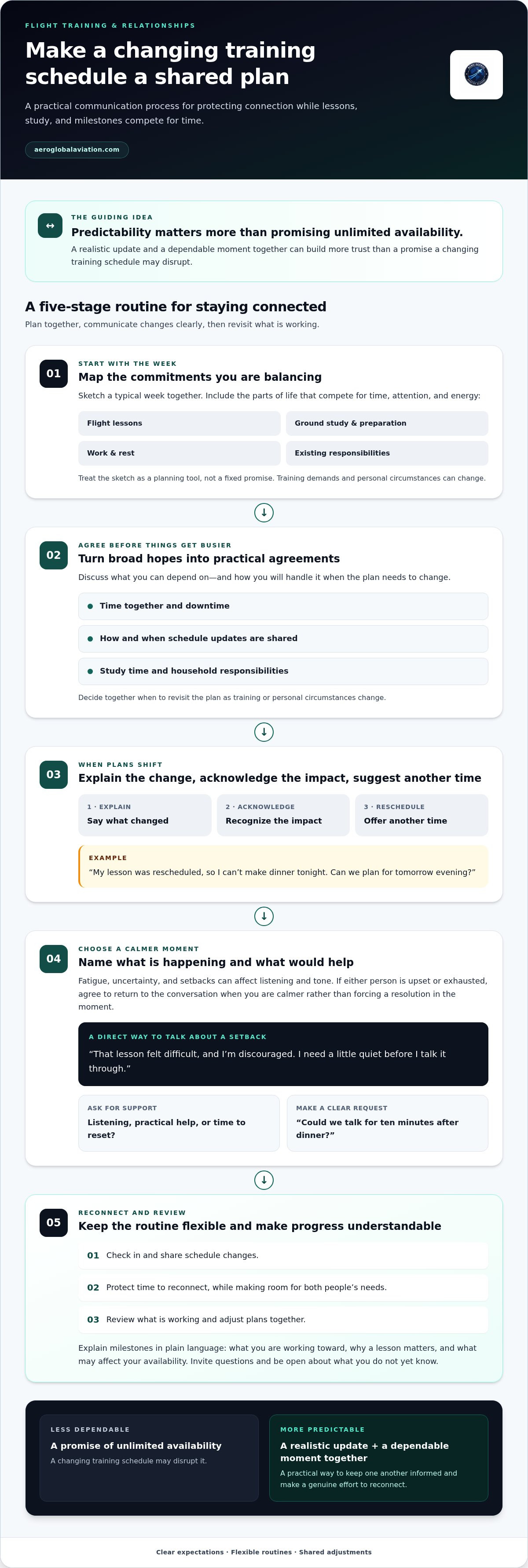
Predictability matters more than promising unlimited availability. A realistic update and a dependable moment together can build more trust than a promise a changing training schedule may disrupt.
Which parts of flight training can change everyday routines?
Students balance lessons with ground study, preparation, work, rest, and existing responsibilities. In the Kissimmee and Orlando area, weather and scheduling changes can also affect plans, so a day may not unfold as expected. If a lesson shifts and you need to postpone dinner, explain what changed, acknowledge the impact, and suggest another time: “My lesson was rescheduled, so I can’t make dinner tonight. Can we plan for tomorrow evening?”
Why can loved ones feel left out or uncertain?
Aviation terms and training milestones may be unfamiliar to people outside the cockpit. If you mention a checkride, a new rating, or a lesson setback without explaining it, loved ones may find it hard to understand your progress or what comes next. Being busy is part of a full training schedule; leaving someone to guess why plans keep changing can add uncertainty. Ask what would help them feel included, such as a plain-language update or a heads-up when your schedule changes.
Small explanations can make a professional goal easier to share. Tell a loved one what you’re working toward this week, why a lesson matters, and what might affect your availability. You don’t need to give a technical briefing or turn every conversation into a training report. Invite questions, listen to concerns, and be open about what you don’t yet know.
As you focus on managing relationships during intensive flight training, treat changing routines as something to discuss together, not as proof that either person cares less. Clear, calm communication gives you both a better chance to adapt as you work toward the next milestone.
How Flight Training Stress and Career Goals Affect Communication
Training stress can come from balancing lessons, study, preparation, and uncertainty about what comes next. It isn’t inevitable, and it doesn’t mean a student can’t manage the demands. But on a tiring day, it may be harder to listen closely, explain what’s wrong, or choose a gentle tone. A short answer can sound dismissive, while a worried question may land as criticism.
A career goal and a loved one’s need for connection can both matter. The student may be focused on the next lesson or milestone; their partner may want to feel included in the journey, not compete with it. Managing relationships during intensive flight training means making room for both perspectives. A specific request is easier to answer than an unspoken expectation: “Could we talk for ten minutes after dinner?” gives the other person a clear way to respond.
How can students talk about setbacks without shutting down?
Describe what happened, how it felt, and what you need, without assigning blame. For example: “That lesson felt difficult, and I’m discouraged. I need a little quiet before I talk it through.” This shares the experience without asking a partner to solve it. If either person is upset or exhausted, agree to return to the conversation at a calmer time rather than forcing a resolution in the moment.
How can partners support a pilot-in-training without taking over?
Ask what kind of support would help: listening, practical help, or time to reset. The student remains responsible for their study, schedule, and motivation. A partner can be encouraging without managing those tasks. Support also doesn’t require ignoring personal needs. It’s reasonable to say, “I want to hear about your day, and I also need us to set aside time to talk about ours.”
Small, direct requests make support more mutual. A student might ask for a few minutes to decompress, then suggest when they’ll be ready to reconnect. A partner can say when a change of plans has left them disappointed while staying curious about what happened. Neither person has to guess what the other needs or treat every tense exchange as a verdict on the relationship.
Training milestones can give these conversations a useful reference point. Understanding the next step in a structured pathway, such as professional flight training programs, can help students explain what they’re working toward and discuss how it may affect daily life. Keep the conversation open: a clear goal doesn’t mean every week will unfold exactly as planned.
What to Agree on Before Intensive Flight Training Gets Busier
Before your schedule fills up, sit down together and turn broad hopes into agreements you can follow. Sketch a typical week, including lessons, study, work, rest, and existing responsibilities. Treat it as a planning tool, not a fixed promise. Training demands and personal circumstances can change, so decide how you’ll revisit the plan when they do.
How do you set realistic expectations about time and availability?
Separate time that needs protection from time you can plan together. Study and rest may need flexible blocks, while a meal or shared activity can be pencilled in with room to adjust. Ask each other: How much notice helps when plans change? Which commitments should we try to preserve? What’s a good way to suggest another time?
| Vague expectation | Specific, realistic agreement |
|---|---|
| “We’ll spend more time together.” | “Let’s choose a time together each week, then adjust if training changes.” |
| “I’ll let you know if I’m busy.” | “I’ll share schedule changes as soon as I know, and tell you when I can update you.” |
| “I need time to study.” | “Let’s identify likely study periods and avoid treating them as automatically available.” |
| “We’ll split things fairly.” | “Let’s name household tasks, agree who handles them for now, and revisit if the load shifts.” |
| “I’ll rest when I can.” | “Let’s respect each other’s downtime and talk before making plans that use it.” |
What should you discuss about goals, boundaries, and changes?
Give each person room to explain what they hope training will make possible and what they need along the way. Boundaries can cover rest, household responsibilities, finances, and time together. Discuss them without assuming one person’s goals automatically outweigh the other’s needs. A structured pathway can make upcoming milestones easier to discuss. For context on the stages of professional training, explore the Career Pilot Program guide.
Agree on how to handle changes, too. A shifted lesson or heavier study period doesn’t have to become a broken promise; it can prompt an update and a new plan. Managing relationships during intensive flight training works best when agreements are clear but adjustable. Revisit them when a milestone, schedule, or home responsibility changes, and ask whether the plan still feels fair to both of you.
Practical Routines for Staying Connected During Intensive Flight Training
Routines give you a reliable way to reconnect without expecting every day to go to plan. Keep them simple enough for a busy week and flexible enough to adjust when lessons, study, or personal commitments shift. A short, focused exchange can help more than waiting for the perfect time for a long conversation.
What can a useful weekly check-in cover?
Choose a regular time to look ahead together. Keep the conversation collaborative, not a performance review of whether either person has done enough.
- Share known commitments and flag likely schedule changes.
- Name one shared priority, such as a meal together or a household task.
- Invite each person to raise a concern before it turns into frustration.
If a longer conversation isn’t practical, try a brief update: “My schedule changed, and I may be home later. Can we check in tonight?” The goal is to share useful information and agree on a next step, not to solve everything by text.
How do you repair a disagreement after a stressful day?
If one of you needs a pause, say so and agree when you’ll return to the conversation. Once you’re both ready, name your part without blame: “I was distracted and answered sharply. I’m sorry. Can we talk about the plan now?” A specific apology and a clear next step make repair more practical than arguing over who started it.
Try this flexible routine:
- Check in: Ask how each person is doing and what kind of conversation would help right now.
- Share changes: Give a clear update when training plans or availability shift.
- Protect connection time: Choose a realistic moment together and let each other know if it needs to move.
- Review and adjust: After a missed plan or especially demanding stretch, discuss what worked and what needs to change.
A missed plan doesn’t have to become a tally of disappointments. Acknowledge its impact, suggest a new time if possible, and revisit the routine if the same difficulty keeps happening. One tense exchange can happen under pressure; recurring conflict that feels hard to resolve may be a reason to seek support from a qualified counselor or another trusted professional.
For students beginning their training journey, the PPL training guide for Florida offers context on the first steps toward a Private Pilot License. Clear milestones can make it easier to talk about what’s ahead. You can also explore Aero Global Aviation Academy’s structured flight training pathways.
Build a Sustainable Training Path with Clear Next Steps
Flight training is easier to discuss when a big career ambition has a clear next step. Align relationship expectations with the milestone you’re working toward now, rather than asking either person to predict the demands of the entire journey. A structured pathway can show what comes next and give you both a shared reference point, but it doesn’t guarantee a fixed schedule. Training plans and personal circumstances can change.
How can training milestones make conversations more concrete?
Talk about the next known goal: what you’re currently studying or which stage you hope to begin next. Share what that milestone means to you and what you know about the steps ahead. Reviewing progress together can help loved ones understand why training matters without making them responsible for your results. If you’re considering the next certification stage, the Career Pilot Program guide above provides context for the pathway from PPL through Commercial Pilot License training.
Aero Global Aviation Academy offers structured options for different points in a pilot’s journey:
- Wings Foundation focuses on Private Pilot License (PPL) training.
- Career Pilot Program takes students from PPL through Commercial Pilot License (CPL) training.
- Airline Pilot Elite spans initial training through advanced instructor certifications.
Discussing the pathway you’re considering can help you explain the direction of your training and identify which upcoming goals you’re ready to plan around. Keep the conversation open to adjustments rather than treating a program outline as a promise about exact timing.
What should students do if relationship strain continues?
If the same concerns keep resurfacing, set aside time to name them honestly and agree on changes each person can make. Focus on specific patterns and needs instead of blame. If conflict feels persistent or difficult to manage together, consider seeking support from a qualified professional. Getting help can be a constructive step, not a sign that either person has failed.
Managing relationships during intensive flight training calls for care on both fronts: steady attention to the people who matter and a training plan that reflects your career direction. Aero Global Aviation Academy’s programs in Kissimmee serve students in the Orlando area, with pathways from foundational PPL training through professional pilot and instructor certifications. Discuss which path fits your goals and what expectations you and your loved ones want to set.
Move Forward With a Plan That Supports You Both
Managing relationships during intensive flight training starts with realistic expectations, clear updates, and dependable moments of connection. When plans change, explain what’s happening and make a new plan together. Keep checking in as training milestones and personal needs evolve.
Your career goal matters, and so does the support of the people sharing the journey with you. A clear training pathway can make upcoming steps easier to discuss without assuming every week will follow a fixed schedule. Aero Global Aviation Academy in Kissimmee serves students in the Orlando area with structured programs spanning foundational PPL training through professional pilot certifications.
With thoughtful communication and a plan you can revisit, you can pursue your aviation goals while making space for the relationships that matter. Explore Aero Global Aviation Academy’s flight training programs in Kissimmee and take the next step toward your pilot training goals.
Frequently Asked Questions
Can intensive flight training affect a relationship?
Yes, intensive flight training can affect a relationship by changing how much time and energy partners have for each other. Lessons, study, preparation, and schedule changes may disrupt familiar routines. That pressure doesn’t automatically mean the relationship is failing. Talk about what’s changing, share updates when plans shift, and look for realistic ways to stay connected while training continues.
How do you balance flight training and a relationship?
Managing relationships during intensive flight training takes clear communication and realistic plans, not unlimited availability. Discuss your likely commitments, protect time for rest and study, and choose a manageable opportunity to connect. If a lesson or other training demand disrupts a plan, let your partner know and suggest a new time. Review your routine together as circumstances change.
What should I tell my partner before starting flight training?
Explain why you want to train, what the next steps are, and how lessons and study may affect your availability. Be honest that schedules can change, and avoid promising a routine you may not be able to maintain. Ask what your partner needs to feel included, then agree on how you’ll share updates, handle household responsibilities, and revisit plans if training becomes busier than expected.
How can a partner support a student pilot?
A partner can support a student pilot by asking what would help in the moment: listening, practical help, or quiet time to reset. They can show interest in milestones without taking responsibility for the student’s study, schedule, or motivation. Support works best when both people can express their own needs and boundaries, including a need for rest, personal time, or a more predictable plan.
What happens if flight training keeps disrupting plans?
If training repeatedly disrupts plans, discuss the pattern rather than treating each change as an isolated disappointment. Share what the disruption means to each of you, agree on how and when updates should happen, and make a realistic replacement plan where possible. Revisit the arrangement after a demanding stretch. If recurring conflict feels difficult to resolve together, consider speaking with a qualified professional.
Is it normal to feel stressed during intensive flight training?
Feeling stressed can happen when lessons, study, personal responsibilities, and uncertainty compete for your attention. Stress isn’t inevitable, and it doesn’t mean you’re incapable of reaching your goals. Notice how fatigue or a setback affects your conversations, and pause if you need time before discussing a difficult topic. If pressure feels persistent or hard to manage, consider seeking appropriate professional support.
How can I explain flight training to family members who are unfamiliar with aviation?
Explain the training in everyday language: what you’re learning now, why that step matters, and what milestone you’re working toward next. Define aviation terms rather than assuming family members know them, and invite questions. A structured path can make progress easier to describe. Aero Global Aviation Academy in Kissimmee serves the Orlando area with programs from foundational PPL training through professional pilot certifications.


