The most expensive mistake a student pilot makes isn't in the cockpit; it's arriving at the hangar without a solid pre-flight plan. If you're feeling overwhelmed by technical jargon and the financial commitment, you're not alone. Understanding the flight school requirements Orlando candidates must meet can feel like deciphering a complex flight chart before you've even learned to taxi. Many prospective pilots worry about the FAA medical process or how they'll manage the academic load while balancing their budget.
We believe that preparation is the ultimate cost-saver in aviation. This guide will help you master the administrative, academic, and local logistics required to start your journey in Central Florida with total confidence. You'll gain a clear six-month roadmap to enrollment, learn how to secure your medical certificate without the stress, and discover what to study early to save thousands on your training. By the time you reach the runway, you'll be ready to focus on what matters most: the sky.
Key Takeaways
- Secure your FAA First Class Medical Certificate before enrolling to ensure you meet the physical standards required for a professional aviation career.
- Navigate the essential flight school requirements Orlando candidates must fulfill by starting your ground school studies early to reduce your total time in the cockpit.
- Prepare your finances by comparing structured programs like the Career Pilot Program against pay-as-you-go options to find the most efficient path for your budget.
- Leverage the strategic advantages of training at Kissimmee Gateway Airport, where the local climate and lower traffic volume accelerate your learning pace.
- Identify the right training track for your goals, whether you are building a professional foundation with the Wings Foundation or aiming for the Airline Pilot Elite certification.
Your Pre-Flight Checklist: Securing Medicals and Mental Readiness
The journey to the flight deck begins long before you buckle into a Cessna. In our experience, the most successful students are those who treat their preparation like their first official flight assignment. Meeting the flight school requirements Orlando academies demand involves more than just a passion for the sky; it requires a strategic approach to your physical and mental eligibility. By clearing these hurdles early, you ensure that your investment in commercial pilot training is protected by a solid foundation of readiness.
The FAA Medical Exam: Your First Real Test
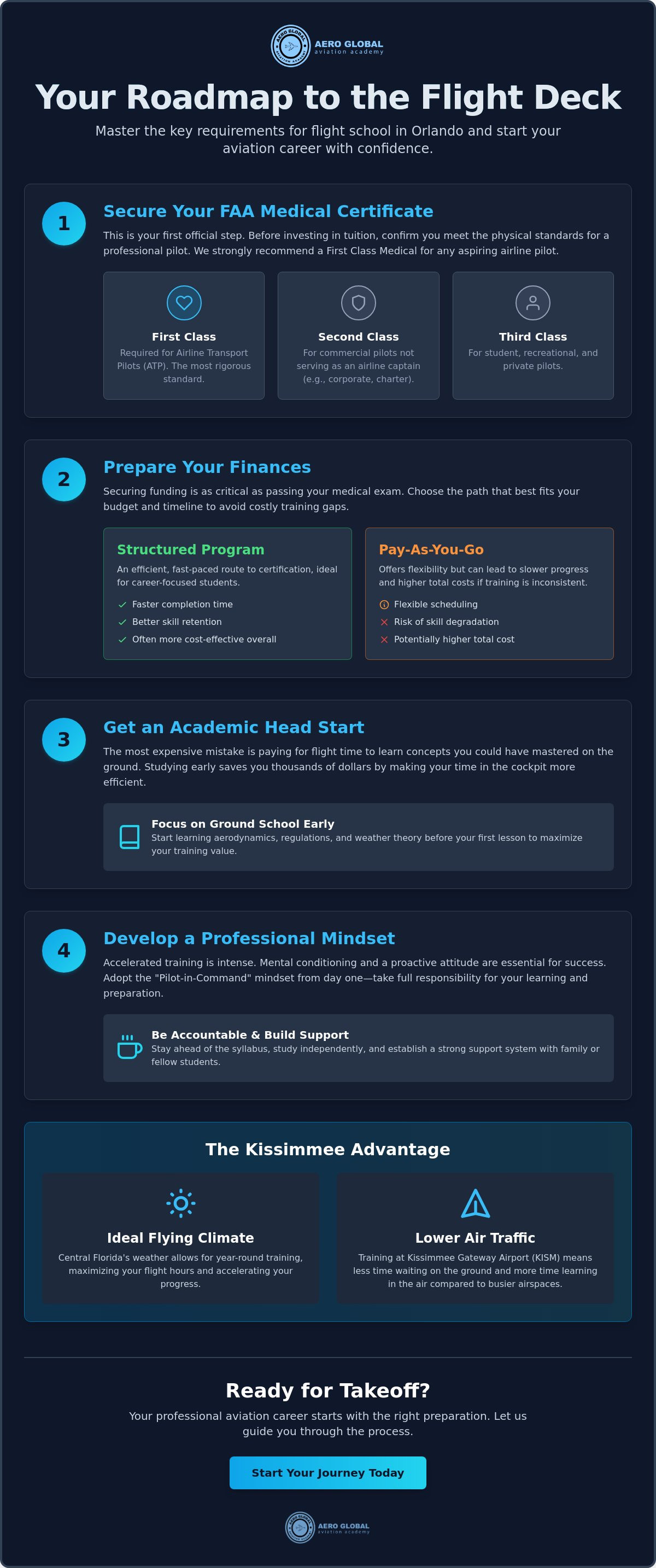
The FAA First Class Medical Certificate is the essential entry requirement for anyone aiming for a career at the airlines. While a Third Class medical might suffice for a weekend hobbyist, professional tracks require the highest level of health screening. We strongly advise you to see an Aviation Medical Examiner (AME) before committing to any tuition. This step confirms that you are physically capable of holding the ratings you're working toward. Understanding Pilot certification in the United States starts with knowing which medical class fits your long-term goals.
- First Class: Required for Airline Transport Pilots (ATP). It involves the most rigorous testing, including EKG requirements for older pilots.
- Second Class: Necessary for commercial pilots who fly for hire but not as an airline captain.
- Third Class: Designed for private pilots and student pilots not pursuing a professional career.
Common disqualifiers often include uncontrolled diabetes, certain cardiovascular conditions, or vision that cannot be corrected to 20/20. If you have a history of these issues, don't panic. You can often seek a Special Issuance through a deferred medical process. To keep your timeline on track, start your application via the FAA MedXPress system at least 30 days before your appointment to avoid administrative delays.
Mental Conditioning for Accelerated Training
Transitioning from an aviation enthusiast to a professional trainee requires a significant mental shift. Our Kissimmee-based programs operate in a high-intensity, accelerated environment that mirrors the pace of the airline industry. You should expect a massive influx of technical information within your first 30 days. This isn't just about memorizing facts; it's about developing the discipline to study independently and stay ahead of the syllabus.
Relocating to Central Florida is an exciting step, but it's vital to establish a support system early. Whether it's connecting with fellow students or staying in close touch with family, having a stable emotional base allows you to focus entirely on your training. The Pilot-in-Command mindset is the unwavering commitment to take total responsibility for the safety and outcome of every flight long before you ever leave the ground. Adopting this level of accountability early is one of the most important flight school requirements Orlando students can bring to the hangar.
Funding Your Future: Financial Preparation for Orlando Flight Training
Securing your funding is just as critical as obtaining your FAA medical certificate. While the path to a career in the cockpit is rewarding, it requires a clear-eyed analysis of the total investment. Unlike traditional academic routes, commercial pilot training is often front-loaded. You're paying for aircraft time, fuel, and expert instruction as you go. Planning for these costs is a central part of the flight school requirements Orlando students must navigate before their first takeoff.
You'll need to decide between pay-as-you-go training and structured, financed programs. Pay-as-you-go offers flexibility for those working full-time, but it can lead to slower progress and higher total costs if gaps in training occur. Structured programs require a larger upfront commitment but often provide a more efficient route to your ratings. This momentum is vital for retaining technical skills and staying on schedule.
Financing Options and Flight Training Loans
Many of our trainees utilize specialized aviation lenders like Meritize or Sallie Mae. These institutions understand the unique career arc of a pilot and often offer terms that traditional banks don't, including deferred payments during your training phase. If you're considering a loan, focus on these three steps to strengthen your application:
- Reduce Debt-to-Income: Pay down high-interest credit card balances at least three months before applying.
- Audit Your Credit: Ensure there are no errors on your report and avoid opening new credit lines.
- Secure a Co-signer: Having a reliable co-signer can significantly lower your interest rates and improve approval odds.
While personal savings can reduce your debt load, keeping a liquid cash reserve is wise. We recommend a living expense buffer for at least the first six months. This ensures you can focus entirely on your studies without the stress of daily bills while you relocate to Central Florida.
Budgeting for Hidden Costs
Your budget must account for more than just hourly aircraft rates. Essential costs include FAA checkride fees, which are paid directly to examiners, and digital tool subscriptions like ForeFlight. Training at Kissimmee Gateway Airport (KISM) offers a distinct financial advantage over busier hubs. You'll encounter less "dead time" idling on the taxiway waiting for commercial jets, which means more of your money goes toward actual flight time.
One early investment you shouldn't skip is a high-quality noise-canceling headset. It protects your hearing and reduces the mental fatigue that comes with a noisy cockpit environment. Buying a professional-grade set by your second week of training is a smart move for long-term comfort. If you want to see how these financial steps align with your career goals, you can review our professional flight certification programs to build your roadmap.
Academic Head Start: What to Study Before Your First Lesson
Arriving at your first lesson with your head already in the books is the fastest way to save money and reduce stress. We call this the Ground School First strategy. It's a proactive approach to the flight school requirements Orlando students often find most challenging. By tackling the theory before you ever start the engine, you minimize the expensive hours spent on the ground with an instructor and maximize your actual time in the air. This preparation transforms you from a passive observer into an active participant from day one.
Your journey starts with two essential FAA publications: the Pilot’s Handbook of Aeronautical Knowledge (PHAK) and the Airplane Flying Handbook. These aren't just textbooks; they're the blueprints for your entire career. You should also secure a current copy of the FAR/AIM (Federal Aviation Regulations / Aeronautical Information Manual). Think of this as your professional Bible. It contains every regulation and procedure you'll need to know to stay compliant and safe in the National Airspace System. Reading these early allows the concepts of aerodynamics and weather to marinate before you have to apply them in a moving aircraft.
Mastering the FAA Written Exams Early
Completing your private pilot license florida ground material before you arrive in Kissimmee is a total game changer. We recommend using online test prep platforms such as King Schools or Sporty’s to begin your studies at home. The FAA written exam is often the biggest bottleneck for new students because it requires significant quiet study time that becomes scarce once you're flying multiple times a week. Getting this certificate out of the way early frees up your mental bandwidth to focus on the physical stick-and-rudder skills required for your first solo flight.
Learning the Language of Aviation
Aviation has its own dialect, and the sooner you speak it, the more comfortable you'll feel in the cockpit. Start practicing the phonetic alphabet in your daily life. Spell out license plates or grocery lists using Alpha, Bravo, and Charlie until it becomes automatic. You can also listen to LiveATC.net and search for Kissimmee Gateway (KISM). Hearing how pilots and controllers interact in real-time helps you normalize radio communications and professional terminology. At its core, you're learning how to manage the four forces of flight, where lift opposes weight and thrust opposes drag to keep the aircraft in equilibrium.
Don't overlook the power of home flight simulators or mobile apps for familiarizing yourself with cockpit instrumentation. Use these tools to learn the layout of the "six-pack" instruments, such as the altimeter and airspeed indicator. While a home sim won't teach you how to "feel" the plane, it will help you develop a scan pattern. This foundational knowledge ensures you aren't searching for the right gauge while your instructor is trying to teach you how to land.
Navigating Central Florida: Logistics for Your Move to Kissimmee
Moving to Central Florida is a strategic decision that places you in one of the world's most active aviation corridors. While many people focus on major hubs like Orlando International Airport (MCO), professional trainees find that Kissimmee Gateway Airport (KISM) is the superior choice for daily flight operations. KISM provides the perfect balance of proximity to complex airspace without the exhausting taxi delays and heavy commercial jet congestion found at larger airports. This efficiency is a practical part of the flight school requirements Orlando students should consider when planning their training timeline.
You'll quickly find that a personal vehicle is a necessity for navigating life in Central Florida. While the region is a global tourism destination, the infrastructure is designed for drivers. Having your own car ensures you can reach the hangar for early morning weather briefings or stay late for ground school sessions without relying on inconsistent public transit or expensive rideshare services. Managing the local climate is also part of your daily routine. You'll learn to respect the Florida heat and navigate the predictable afternoon thunderstorms that define the summer months, a process that builds essential aeronautical decision-making skills.
Living in Kissimmee: Housing and Lifestyle
Choosing the right neighborhood can significantly impact your academic performance. We recommend looking into residential areas in Hunters Creek or the northwestern parts of St. Cloud. These locations offer a short, reliable commute to the academy, which helps you maximize your rest and study hours. Many of our students opt for shared housing with fellow pilots to reduce costs. This arrangement creates a built-in support system of peers who are navigating the same technical challenges and milestones as you.
Living in the vacation capital of the world offers plenty of distractions. It's vital to enjoy the local attractions in moderation so they don't interfere with your professional focus. Treat a visit to the parks as a reward for passing a stage check or a written exam rather than a daily habit.
The Orlando Airspace Advantage
Training in this region provides a unique educational edge that quieter areas simply can't match. The complexity of the surrounding Class B airspace forces you to develop superior radio communication and situational awareness skills from your very first hours. This high-level environment prepares you for a faster airline pilot career path, as you'll be comfortable navigating busy corridors that often intimidate pilots from rural regions.
The Florida sun provides excellent year-round VFR (Visual Flight Rules) flying conditions, but it requires specific pilot gear. Invest in high-quality polarized sunglasses to manage the cockpit glare and maintain a strict hydration routine to combat the ramp heat. These small lifestyle adjustments ensure you stay sharp during long training blocks. If you're ready to see how our strategic location can accelerate your progress, explore our training facilities at Kissimmee Gateway Airport to see where your journey begins.
Selecting Your Flight Path: Aero Global Academy Programs
Once you've cleared your medical certificate and organized your budget, the next logical step is choosing the training syllabus that aligns with your ultimate destination. Whether you're looking to fly for personal enjoyment or aiming for a captain's seat at a major airline, our programs are designed to meet the flight school requirements Orlando students need for success. Choosing the right path early prevents unnecessary spending and keeps your training momentum high. We see every student as an individual, and we're here to help you navigate the specific certifications required to turn your dream into a tangible career.
For those who want to test their passion before committing to a full career shift, the Wings Foundation is the ideal starting point. This course focuses exclusively on the Private Pilot License (PPL), providing you with the foundational skills to navigate the "driver's license of the sky." It's an excellent way to experience the thrill of flight while building a solid base that you can later expand into professional ratings. Many students find that starting with the Wings Foundation allows them to manage their initial training hours with less pressure before deciding to transition into a more intensive professional track.
If your goal is a professional cockpit, the career pilot program is our most popular roadmap. It takes you from zero experience all the way to your Commercial Pilot License (CPL). This structured track is designed for efficiency, moving you through your Instrument Rating and Commercial multi-engine certifications with a focus on airline readiness. For those who want the most comprehensive training available, the Airline Pilot Elite program adds advanced instructor certifications. This path allows you to build the critical flight hours required for the airlines while gaining valuable experience as a mentor to new students.
Wings Foundation vs. Career Pilot Program
Assessing your long-term goals is a vital part of the enrollment process. The Wings Foundation is perfect for hobbyists or those with limited schedules who want to enjoy the freedom of flight. In contrast, the Career Pilot Program is a full-time commitment meant for those pursuing a total lifestyle change and a professional salary. Both tracks require the same dedication to safety and technical excellence, but the career-oriented paths offer a much faster transition into the aviation industry. You'll need to consider how much time you can dedicate each week to both flying and ground school to ensure you stay on pace with your chosen syllabus.
The Final Step: Enrolling and Booking a Discovery Flight
Before you sign your final enrollment papers, we always recommend taking a Discovery Flight. This isn't just a scenic tour; it's your first real opportunity to handle the controls and confirm your comfort in the cockpit environment. It's the best way to ensure that the high-intensity world of flight training is the right fit for your personality and goals. When you're ready to move forward with the flight school requirements Orlando academies expect, you'll need to gather your essential documentation. Be sure to have your birth certificate, a valid passport, and your FAA medical records ready for our admissions team. To take that first step toward your new career, Book your Discovery Flight at our Kissimmee center today!
Take Your First Step Toward the Flight Deck
Success in aviation is built on the work you do before you ever leave the ground. By securing your medical certificate early and mastering ground school theory before your arrival, you position yourself to save both time and money. Meeting the flight school requirements Orlando academies expect is a structured process, and having a clear roadmap ensures you arrive at the hangar ready to focus on your training. At Aero Global Academy, we take pride in our location at Kissimmee Gateway Airport (KISM), where our professional mentors use their real-world airline experience to guide you through our structured PPL to CPL career tracks.
Your journey from a student to a professional pilot is an attainable goal with the right partner. Whether you're testing your passion or ready for an intensive career shift, the sky is waiting for you. To ensure you have every detail covered, Download our 2026 Flight School Readiness Checklist and begin your preparation today. We're excited to welcome you to the Central Florida pilot community and help you reach your professional destination with confidence.
Frequently Asked Questions
How much does it cost to start flight school in Orlando in 2026?
Starting your journey involves several initial investments, including your FAA medical exam, ground school materials, and an enrollment deposit. While total costs vary based on your pace and the specific program you choose, preparing for these upfront expenses is a key part of the flight school requirements Orlando students must manage. We recommend speaking with an admissions counselor to build a personalized financial plan that fits your specific career goals.
Do I need a college degree to become an airline pilot?
You don't need a college degree to earn your pilot licenses or to work for many regional airlines. While some major legacy carriers still prefer a four-year degree for competitive hiring, the industry has become more flexible. Many pilots choose to finish their flight training first to start earning seniority. You can then complete an online degree while working as a professional pilot.
How long does it take to go from zero experience to a commercial pilot license?
Reaching a commercial pilot license from zero experience typically takes 6 to 10 months in an accelerated, full-time program. If you're training part-time, the timeline can extend to 18 months or more. Your consistency and the frequency of your flights are the biggest factors in how quickly you'll move through the syllabus and reach the flight deck.
What is the best age to start flight school for a career change?
There isn't a single "best" age; many successful career changers start in their 30s or 40s. As long as you can pass a First Class medical exam and have time to build hours before the mandatory airline retirement age of 65, you can have a rewarding career. Your maturity and previous professional experience are often seen as significant assets in the cockpit.
Can I work a full-time job while attending flight school in Orlando?
Working full-time while enrolled in an accelerated Career Pilot Program is extremely challenging due to the intensive study and flight schedule. However, students in our Wings Foundation course often balance their training with a job. If you're aiming for a professional career, we usually suggest a part-time work schedule to ensure you have enough mental bandwidth for ground school.
What happens if I fail my FAA medical exam?
Failing an FAA medical exam isn't always a permanent roadblock for your career. Many conditions can be managed through a process called Special Issuance, where the FAA grants a certificate after a more detailed review of your health. It's vital to consult with an Aviation Medical Examiner before you begin training to identify any potential issues and start the necessary paperwork early.
Is Orlando a good place for flight training during the summer thunderstorms?
Orlando is an exceptional place for training even during the summer months. While afternoon thunderstorms are common, they are very predictable; this allows us to schedule flights in the clear morning air. This environment actually helps you become a better pilot by teaching you how to read weather patterns and make safe, professional aeronautical decisions in a real-world climate.
What should I bring to my first day of flight school at Aero Global?
For your first day at the academy, you should bring your FAA medical certificate, proof of citizenship, and a government-issued ID. We also suggest bringing a notebook, a pen, and a high-quality aviation headset if you've already purchased one. Most importantly, bring a disciplined mindset and a genuine passion for learning as you start your professional journey at Kissimmee Gateway Airport.


