What if the gap between your 250-hour commercial checkride and a major airline cockpit wasn't a waiting room, but the most exciting part of your career? Many new pilots feel a sense of dread when they realize they're still 1,250 hours away from the regional airlines. It's easy to feel overwhelmed by technical requirements or stuck in a holding pattern while searching for entry-level work. You've put in the hard work to earn your license; now you want to know exactly what jobs you can get with a CPL in Florida to start earning a living while you climb the ladder.
We understand that the path to 1,500 hours can feel daunting, but Florida's unique aviation landscape offers a strategic advantage that most other states can't match. In this 2026 guide, you'll discover a clear list of high-demand roles available to pilots with 250 to 500 hours. We'll explore how to leverage the state's tourism and year-round flying weather to build time efficiently. From flight instructing to aerial photography, we're laying out the most lucrative career paths that turn your commercial pilot license into a powerful tool for professional growth.
Key Takeaways
- Identify the legal privileges of your Commercial Pilot License and how to transition from paying for flight hours to earning a professional paycheck.
- Discover the most effective jobs you can get with a CPL in Florida, including flight instructing and aerial mapping, to build time toward the 1,500-hour airline requirement.
- Explore specialized local opportunities in corporate charter and agricultural aviation that leverage Florida’s unique geography and thriving business hubs.
- Gain a strategic roadmap for networking within the Kissimmee and Orlando aviation communities to secure your first professional cockpit seat.
- Learn how advanced training paths like the Airline Pilot Elite program can refine your skills and make you a more competitive candidate for top-tier employers.
Launching Your Professional Aviation Career with a Florida CPL
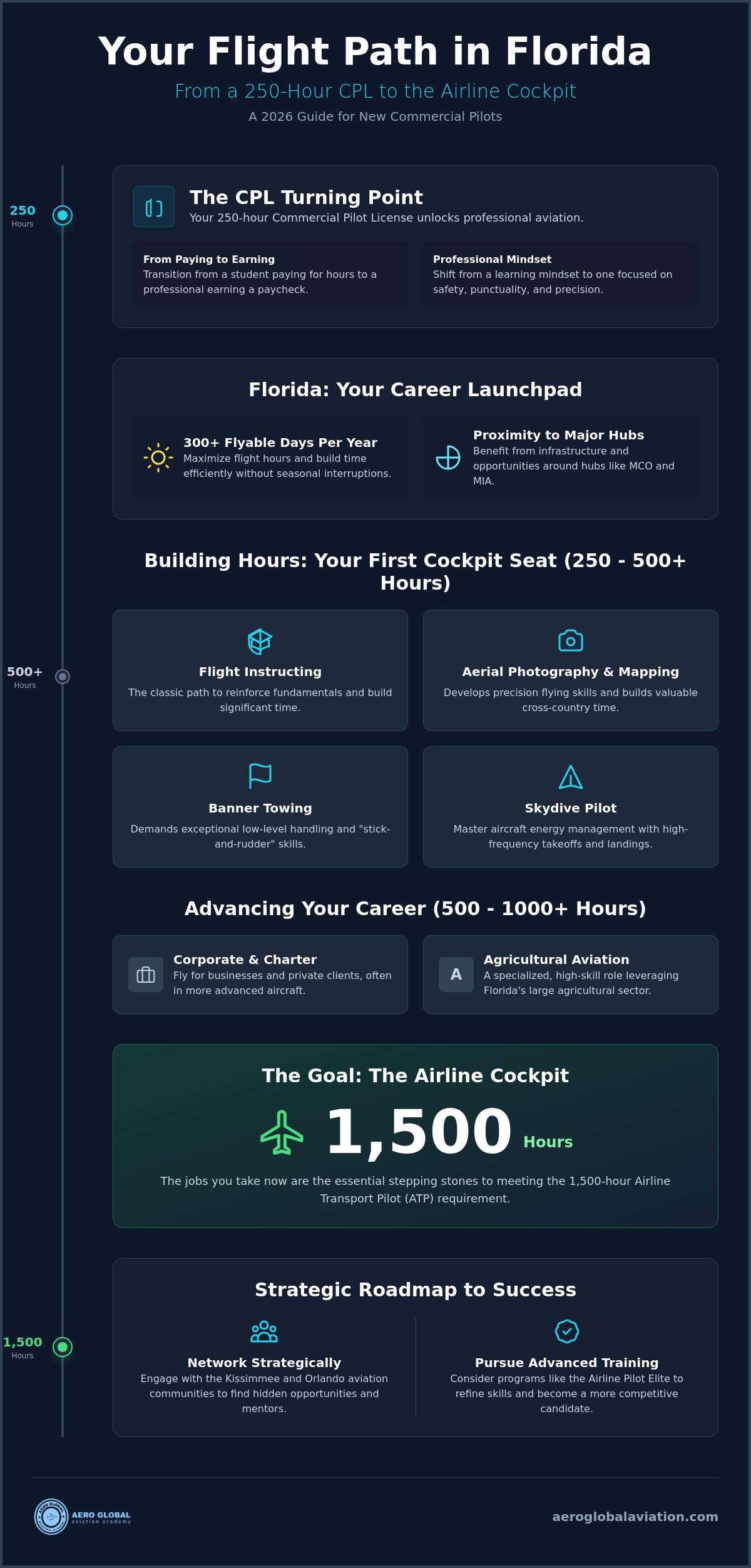
Reaching 250 flight hours is more than just a logbook entry; it's the moment your investment starts paying you back. For many aspiring aviators, the search for jobs you can get with a CPL in Florida begins the very day they pass their checkride. This certification serves as the professional tipping point, moving you from the world of student training into the ranks of working aviators. You've spent months or years honing your skills, and now the FAA officially recognizes your ability to handle the high-stakes environment of commercial flight.
The legal privileges of a Commercial Pilot License (CPL) are transformative. While a Private Pilot License (PPL) only allows you to share expenses with passengers, a CPL grants you the authority to act as pilot-in-command of an aircraft carrying persons or property for compensation or hire. You aren't headed to a major airline captain's seat just yet, but you've unlocked the door to a professional paycheck. In Florida, this transition is supported by a massive aviation infrastructure that operates under both Part 91 and Part 135 regulations. New commercial pilots often start in Part 91 roles, such as flight instruction, before moving into the high-paced world of Part 135 on-demand charters.
The 250-Hour Milestone: What Changes?
The transition at 250 hours is largely psychological. You must shift from a student mindset to a professional pilot mindset almost overnight. In this new phase, you're no longer just learning for yourself; you're performing for an employer or a client. Safety, punctuality, and technical precision become your primary metrics for success. Florida’s high density of flight schools and aviation businesses creates a unique internal job market. This environment allows fresh graduates to find their first roles as instructors or safety pilots right where they trained, keeping your career momentum high from day one.
Why Florida is the Best State for New CPL Holders
Florida is widely considered the global hub for flight training and entry-level aviation careers for a reason. The "Sunshine State" advantage isn't just a marketing slogan. It provides over 300 flyable days per year, allowing you to maximize your flight hours per month without the seasonal interruptions common in northern states. Proximity to major international hubs like Orlando (MCO) and Miami (MIA) means the surrounding airspace is filled with opportunities and supporting infrastructure. If you're still planning your timeline, it's helpful to understand how long it takes to become a commercial pilot so you can time your entry into this thriving market. Choosing to start your search for jobs you can get with a CPL in Florida ensures you are in the heart of the action, surrounded by mentors and networking possibilities that don't exist anywhere else.
Entry-Level Commercial Pilot Jobs for 'Low-Hour' Pilots
Finding your first cockpit seat with 250 hours requires a strategic shift in perspective. While the ultimate goal for many is a major airline, the immediate focus is building the experience that makes you hireable. The variety of jobs you can get with a CPL in Florida is surprisingly broad, ranging from coastal banner towing to high-tech aerial mapping. Each role serves a specific purpose in your professional development. Some jobs focus on "stick-and-rudder" skills, while others prioritize cross-country time and decision-making in complex airspace.
Florida's unique geography and tourism industry create niches that don't exist in landlocked states. For example, banner towing along the Atlantic and Gulf coasts is a classic Florida rite of passage. It demands exceptional low-level handling skills and precise coordination. Similarly, skydiving operations in areas like Zephyrhills or DeLand offer "jump pilots" a chance to perform high-frequency takeoffs and landings. This is invaluable for mastering aircraft energy management. According to the current pilot career outlook, the demand for commercial pilots remains strong, particularly in specialized sectors that support regional infrastructure and tourism.
These entry-level roles offer more than just a paycheck; they provide essential professional foundations:
- Operational Discipline: Learning to manage aircraft systems and schedules in a commercial environment.
- Weather Decision-Making: Navigating Florida's unique afternoon thunderstorms and coastal patterns.
- Logbook Growth: Accumulating the specific types of hours, such as night or cross-country time, required for advanced certificates.
The Flight Instructor Path (CFI/CFII)
Becoming a Certified Flight Instructor is often called the gold standard for a reason. It's arguably the fastest way to reach the 1,500-hour airline requirement. In Florida, the constant influx of international and domestic students ensures a steady stream of work. When you teach a maneuver, you master it. Explaining the "why" behind a steep turn or a short-field landing forces you to understand the aerodynamics at a level that simply flying can't provide. If you're looking to accelerate this transition, our Career Pilot Program is designed to move you through these certifications with precision.
Aerial Photography and Pipeline Patrol
If you prefer solo operations, aerial survey and mapping roles are excellent alternatives. Central Florida is a hub for geomatics firms that require precise flying for environmental projects and infrastructure development. As a survey pilot, you'll often travel across the state, operating independently and making critical weather decisions. This role is perfect for building high-quality cross-country time while receiving a steady paycheck. It’s a professional lifestyle that rewards discipline and technical accuracy.
Specialized and Corporate Pilot Roles in the Florida Market
Moving beyond the high-volume training environment, Florida's robust economy supports a wide array of specialized jobs you can get with a CPL in Florida. These roles often require a more tailored skill set but offer a unique look into the world of professional aviation. From the sleek cabins of corporate jets to the rugged demands of agricultural flying, the opportunities here reflect the state’s status as a global business and environmental hub. Once you have secured your certificate by meeting the FAA Commercial Pilot Requirements, you can begin positioning yourself for these mission-specific paths.
One of the most rewarding avenues is the air ambulance and medevac sector. Companies operating across Florida provide critical transport for patients between regional hospitals and specialized care centers. While these missions are high-stakes, they offer pilots a profound sense of purpose. Similarly, the tourism sector in the Florida Keys and Orlando relies on commercial pilots for fixed-wing sightseeing tours. These roles allow you to build hours while showcasing the stunning geography of the Sunshine State to visitors from around the world. It's a professional environment where your customer service skills are just as vital as your technical ability.
The Corporate Aviation Hub: Orlando and Beyond
Part 135 charter operations represent the professional bridge between general aviation and the major airlines. In cities like Orlando and Miami, corporations frequently utilize private travel to bypass commercial delays. While Captain positions in these fleets often require high flight time, many operators hire First Officers with lower hours to assist in the cockpit. Networking is your greatest tool here. Spending time at Fixed Base Operators (FBOs), such as those at the Kissimmee Gateway Airport, can lead to informal introductions that turn into career breakthroughs. To be competitive for these multi-engine roles, you may want to explore advanced flight training to ensure your ratings match the sophisticated equipment used by corporate fleets.
Florida’s Agricultural and Environmental Sectors
Central Florida’s vast farmlands and the unique ecosystem of the Everglades create a steady demand for agricultural and environmental pilots. Agricultural aviation involves precise low-level maneuvers to protect Florida's citrus and sugar crops. It's a demanding field that requires specialized training and a deep respect for the aircraft’s performance limits. If you prefer environmental work, state agencies often hire commercial pilots for wildlife surveys and ecosystem monitoring. Additionally, the role of a ferry pilot offers a dynamic way to see the region. Ferry pilots move aircraft across the state or even over to the Caribbean, providing a fantastic way to gain diverse experience in different airframes and international procedures. You'll build confidence as you navigate different airspaces and handle the logistics of relocating aircraft for owners and maintenance facilities.
Strategic Career Planning: From CPL to the Major Airlines
Earning your commercial certificate is a massive achievement, but it's also the start of a tactical "time-building" phase. For most aviators, the ultimate destination is a seat at a major airline, which typically requires reaching the 1,500-hour threshold for an Airline Transport Pilot (ATP) certificate. Because of this, the jobs you can get with a CPL in Florida should be viewed as strategic stepping stones. Your first job matters because it dictates the quality of the hours you log and the professional habits you develop. Choosing a role that offers high-density flying or complex operations will prepare you for the transition to heavy jets far better than simply "boring holes in the sky."
As you accumulate hours, logbook hygiene becomes your best friend. Recruiters at regional and major airlines look for meticulous documentation. They want to see that you treat every flight with professional gravity, documenting cross-country time, night hours, and instrument conditions with absolute precision. This attention to detail reflects your readiness for the disciplined environment of an airline cockpit. If you're aiming for a long-term trajectory, understanding the airline pilot career path will help you align your current job choices with your eventual goals.
Networking at Florida’s General Aviation Airports
In the aviation industry, your technical skills get you the interview, but your network often gets you the lead. Florida’s general aviation airports, like Kissimmee Gateway and Orlando Executive, are vibrant hubs of "hangar talk." Being present at these airfields allows you to build relationships with chief pilots and fleet managers who are often looking for reliable new hires. Attending major industry events, such as the Sun 'n Fun Aerospace Expo in Lakeland, provides a relaxed environment to meet recruiters from across the country. At Aero Global, we pride ourselves on acting as a practical mentor, helping our students navigate these local connections to find their first professional break.
For students who want to expand their networking reach even further, exploring international internships through Cape Talent can provide valuable experience in the global aviation and hospitality sectors, making you a more versatile candidate.
The Multi-Engine Advantage
While a single-engine CPL opens many doors, adding a Multi-Engine Rating (MEL) significantly increases the jobs you can get with a CPL in Florida. Most Part 135 charter operators require multi-engine experience for their First Officer positions, as they primarily fly twin-engine turboprops or light jets. This rating doesn't just double your job prospects; it introduces you to more complex aircraft systems and higher-performance standards. It’s a vital asset for anyone looking to move into the corporate or regional airline sectors quickly. If you're ready to elevate your credentials and become a top-tier candidate, explore our Airline Pilot Elite program to master the skills Florida’s top employers demand.
Bridge the Gap with Aero Global Aviation Academy
Transitioning from a student pilot to a working professional is the most critical phase of your aviation career. While you now understand the variety of jobs you can get with a CPL in Florida, securing that first paycheck requires more than just a certificate. It requires a training environment that mirrors the professional world. At Aero Global Aviation Academy, we've designed our programs to act as a bridge, moving you from the classroom to the cockpit with confidence and technical precision. We don't just teach you how to fly; we mentor you on how to succeed in a competitive industry.
Our Career Pilot Program offers a structured, results-oriented path that takes you from your Private Pilot License all the way through your Commercial Pilot License. For those who want to stand out to top-tier Florida employers, our Airline Pilot Elite track provides advanced instructor certifications and refined skills that exceed standard requirements. We prioritize an instructor-focused track because we know it's the most reliable way to build your 1,500 hours while earning a living. By training with us, you're not just a student; you're a professional in training, surrounded by experts who are dedicated to your individual success.
Why Train in Kissimmee, Orlando?
Location is a strategic asset in flight training. By choosing to train in Kissimmee, you gain immediate access to some of the most diverse airspace in the country. The proximity to Orlando’s international hubs means you’ll become comfortable communicating with busy air traffic control and navigating complex patterns from day one. There is a massive benefit to training exactly where the jobs you can get with a CPL in Florida are located. You’ll be networking at the same airfields where charter companies and flight schools are actively hiring. Plus, our personalized mentorship comes from experienced pilots who know the Florida landscape intimately, giving you an "insider" advantage that large, impersonal academies can't provide.
Since clear communication is vital when navigating international hubs, students starting their journey in Singapore can find out more about professional English courses at English Explorer to prepare for the global aviation environment.
Your Next Steps: From Student to Professional
The path to a professional flight deck is a structured process, and it begins with a single step. We invite you to book a career consultation or a discovery flight to see our facilities and meet our team of practical mentors. We can also help you review various financing options available for our professional pilot tracks, ensuring that your dream of a lifelong career is financially attainable. The transition from a beginner to a working pilot is closer than you think. Start your professional pilot journey with the Career Pilot Program today!
Take Command of Your Professional Aviation Future
The journey from a newly minted commercial pilot to a major airline captain is a path paved with strategic choices. You've discovered that the jobs you can get with a CPL in Florida offer more than just a paycheck; they provide the essential flight hours and operational experience required to reach the 1,500-hour milestone. Whether you choose the high-speed environment of corporate charter or the rewarding path of flight instruction, Florida's thriving aviation market ensures your career momentum never stalls.
Aero Global is dedicated to your success by providing professional training at the Kissimmee Gateway Airport. Our programs are meticulously designed for airline career progression, led by expert instructors with real-world Florida commercial experience. We don't just help you earn a license; we help you launch a career. Take the next step toward the flight deck and apply for the Career Pilot Program at Aero Global Aviation Academy today. The clear Florida skies are waiting for you, and your professional destination is well within reach.
Frequently Asked Questions
What is the average starting salary for a CPL pilot in Florida?
The average annual salary for a commercial pilot in Florida is $97,833 as of June 30, 2026. Entry-level salaries typically start around $74,700, while experienced pilots in the 75th percentile can earn up to $115,800. These figures depend heavily on the sector, with corporate charter and regional airline roles generally offering higher compensation than local flight schools or tourism-based operations.
Can I get a job with a CPL and only 250 hours in Orlando?
You can definitely find work in Orlando with 250 hours, though these positions are usually focused on building time toward the 1,500-hour airline requirement. Common jobs you can get with a CPL in Florida at this experience level include flight instruction, aerial photography, and skydiving operations. These roles are essential for gaining professional experience while allowing you to earn a living in a major aviation hub.
Is being a flight instructor the only way to build 1,500 hours in Florida?
Instructing isn't the only option, but it's often the most efficient way to reach your 1,500-hour goal. Florida offers a variety of alternatives such as pipeline patrol, aerial mapping, and coastal banner towing. While these roles provide excellent flying experience, many pilots choose the CFI path because it offers the most consistent schedule and deepens their technical mastery of flight procedures.
Do Florida banner towing jobs require special endorsements?
Most banner towing operations in Florida require a tailwheel endorsement because they frequently use aircraft like the Piper Pawnee. Beyond the legal endorsement, many companies provide their own specialized training to ensure you can safely handle the low-level pick-up and release maneuvers. It's a demanding way to build high-quality flight time while navigating the state's beautiful coastal airspaces.
What are the most in-demand commercial pilot jobs in Florida for 2026?
Flight instructors and Part 135 corporate First Officers are the most in-demand roles for 2026. The surge in regional business travel and pilot retirements has created a massive need for new talent in cities like Orlando and Miami. These are some of the best jobs you can get with a CPL in Florida to gain the multi-engine experience that major airlines prioritize during their hiring process.
How does the Florida weather affect job availability for new pilots?
Florida’s favorable climate increases job availability by allowing for year-round flight operations without the seasonal interruptions found in northern states. With over 300 flyable days annually, aviation companies can maintain consistent schedules, which means more work and faster time-building for pilots. While you'll need to master navigating afternoon thunderstorms, the high volume of flyable hours makes Florida a premier location for professional growth.
Do I need a college degree to get a commercial flying job in Florida?
You don't need a college degree to hold a CPL or work in most entry-level commercial roles. Many corporate flight departments and regional airlines prioritize your total flight time and technical proficiency over a four-year degree. While some major airlines still prefer one, you can successfully build a lucrative career in Florida's charter and survey sectors with just your FAA certifications.
What is the difference between a Part 91 and Part 135 job for a CPL holder?
Part 91 operations generally involve private flying, flight instruction, or specialized work like aerial survey. Part 135 refers to on-demand charter and commuter operations, which have stricter FAA oversight regarding pilot training and maintenance. For a CPL holder, moving into a Part 135 role often represents a significant step up in professional responsibility and is a common milestone before joining a major airline.


