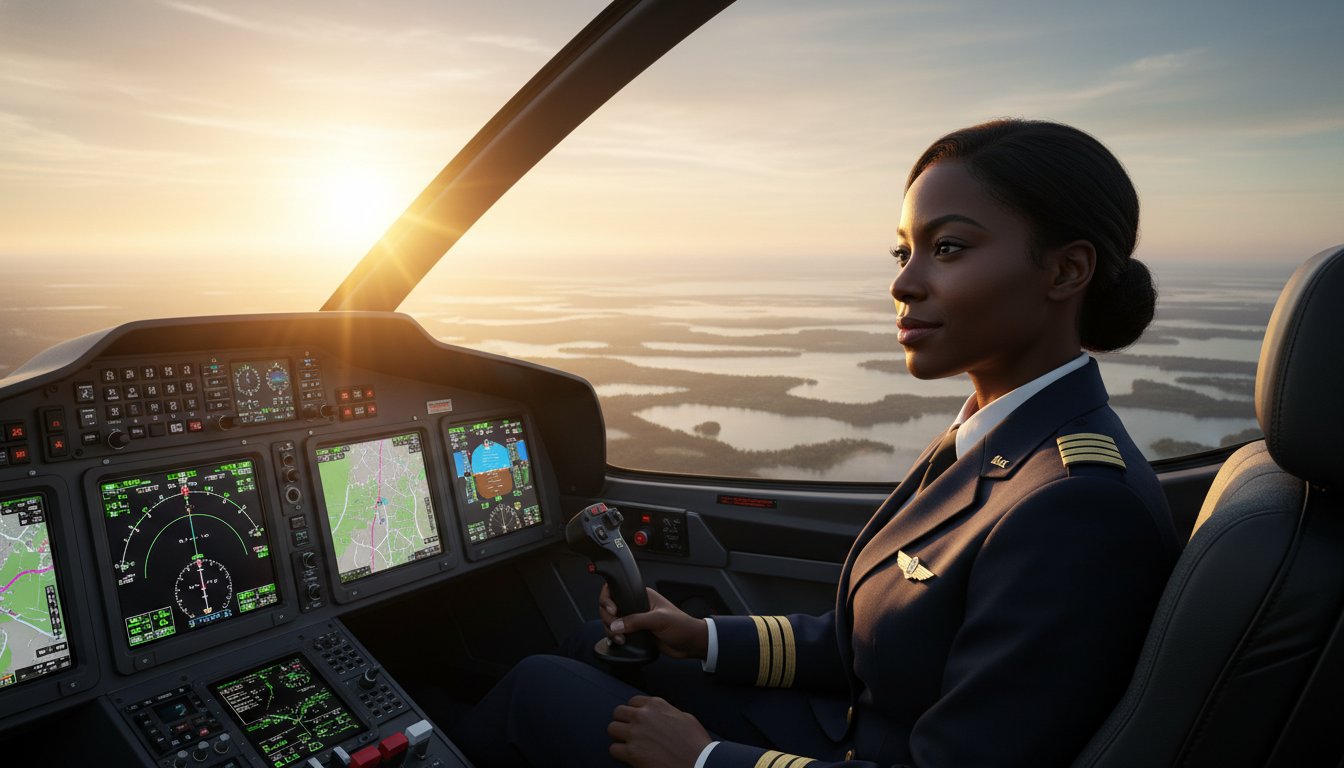
The moment you earn your Commercial Pilot License is the exact second your aviation journey shifts from a rewarding hobby into a lucrative professional career. You've likely felt the pull of the horizon, but perhaps you're also feeling the weight of confusion over license types or the fear that a four-year degree is your only ticket to the cockpit. It's common to feel uncertain about the time commitment or whether you can truly make a living in the sky without a university diploma.
This guide will demystify exactly what is a commercial pilot and show you how to turn your passion for flight into a paycheck. You'll discover that while airline jobs are prestigious, the industry offers a massive range of rewarding paths from corporate jets to flight instruction. We'll break down the 2026 FAA requirements, highlight the advantage of training in Florida's 300 days of annual sunshine, and provide a realistic roadmap to help you launch your career through programs like our Career Pilot Program. Let's explore how you can join the thousands of professionals filling the current pilot shortage and start your journey toward a professional destination that offers both freedom and financial security.
Key Takeaways
- Understand the legal "compensated for hire" status that defines your transition from a private pilot to a professional aviator.
- Gain a clear perspective on what is a commercial pilot by exploring diverse, high-demand roles in cargo, charter, and corporate aviation.
- Identify the specific 250-hour flight time milestones and FAA prerequisites required to earn your professional certification.
- Learn how to adopt the professional pilot mindset that prioritizes safety and mastery during every pre-flight preparation.
- See how training in Central Florida’s strategic airspace can accelerate your timeline toward a professional cockpit.
Defining the Commercial Pilot: More Than Just a Job Title
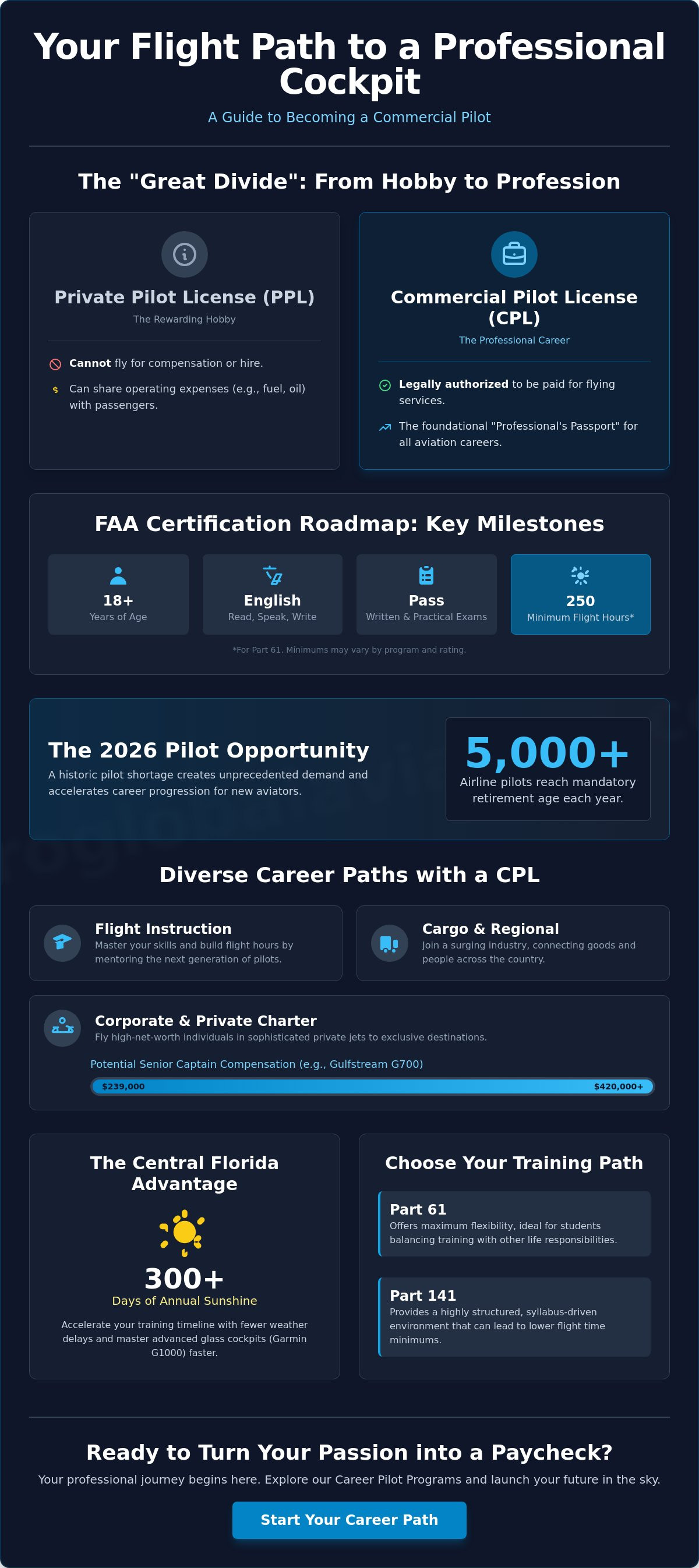
Think of the Commercial Pilot License (CPL) as the "Great Divide" in aviation. It's the precise moment your logbook stops being a record of an expensive hobby and starts being a professional resume. When you ask what is a commercial pilot, you're looking for the legal threshold that separates enthusiasts from professionals. This certificate is your "Professional’s Passport," the foundational document required for every paid flying job on the planet. Whether you want to fly cargo, lead aerial tours, or eventually command a wide-body jet, the CPL is where that career truly begins.
The FAA provides two primary training pathways to reach this goal. Part 61 training offers maximum flexibility for those balancing flight school with other responsibilities. Part 141 programs provide a highly structured, syllabus-driven environment that can sometimes lead to lower flight time minimums. Both paths lead to the same high-stakes checkride, but choosing the right one depends on your personal learning style and how quickly you want to reach the cockpit. Our Career Pilot Program is designed to guide you through this transition with the precision of a professional mentor.
The Legal Distinction: Flying for Fun vs. Flying for Pay
The core difference between a private pilot and a commercial pilot comes down to the concept of "compensation or hire." As a private pilot, you can share expenses with passengers, but you can't make a profit or be paid for your time. The commercial pilot license definition establishes that you are now legally authorized to receive payment for your services. However, it's a common misconception that this license makes you an airline captain immediately. While the CPL allows you to fly for money in various roles, major airlines typically require an Airline Transport Pilot (ATP) certificate. Think of the CPL as the essential entry point that allows you to get paid while you build the flight hours necessary for the next level of your career.
Why 2026 is a Pivotal Year for New Commercial Pilots
There has never been a more strategic time to enter the cockpit. In 2026, the aviation industry is grappling with a massive shortage as over 5,000 airline pilots reach the mandatory retirement age of 65 each year. This creates a vacuum that accelerates promotion timelines for new aviators. Beyond the airlines, the demand for cargo and regional pilots is surging at historic rates. Modern cockpits have also evolved, with advanced glass systems like the Garmin G1000 becoming the standard for professional training. For those training in Central Florida, the 300 days of annual sunshine mean you'll master this technology faster, without the weather delays that plague other regions. With non-airline commercial pilots earning a median annual wage of $122,670, the path to a high-earning career is more accessible than ever before.
The Career Spectrum: Where Can a Commercial Pilot License Take You?
Earning your commercial certificate is about more than just flying for a paycheck. It's about opening a door to a vast ecosystem of aviation that many travelers never see. While many students ask what is a commercial pilot with the goal of reaching a major airline cockpit, the reality is that the CPL is a versatile tool. It allows you to build a lifestyle around your specific interests, whether that means the fast-paced world of emergency response or the precision of aerial surveying. This license serves as your entry point into specialized roles that require a high level of airmanship and professional dedication.
Diverse Career Paths for CPL Holders
For most new professionals, flight instruction is the first major step. It’s a rewarding way to master your skills while helping others achieve their dreams. Through our Airline Pilot Elite program, you can transition from student to instructor, building the high-quality flight time required for future goals. Beyond the school environment, corporate and private charter flying offers a more intimate experience. Instead of a cabin full of strangers, you're flying high-net-worth individuals in sophisticated jets. In fact, senior captains on long-range private aircraft like the Gulfstream G700 can see compensation packages ranging from $239,000 to over $420,000.
Aerial photography and surveying also provide unique opportunities for those who enjoy technical precision. These pilots fly specialized patterns for mapping, environmental monitoring, or media production. This type of flying requires a high level of situational awareness and stick-and-rudder skill that differs significantly from routine transport flights. These roles often provide a better work-life balance than traditional airline schedules, making them attractive long-term career choices.
Specialized Aviation Roles
The industry also relies on pilots for critical infrastructure and life-saving services. Agricultural aviation is a demanding field that requires flying at low altitudes with incredible accuracy to manage land and food supplies. Similarly, cargo and logistics pilots are the backbone of the global supply chain, often flying freighters during the night to ensure goods arrive on time. For those drawn to high-stakes missions, Emergency Medical Services (EMS) pilots provide a vital link in the healthcare system by transporting patients and medical supplies during time-sensitive crises.
Regardless of the specific path you choose, you must first meet the FAA commercial pilot certification requirements. These standards ensure every professional aviator possesses the aeronautical knowledge and flight proficiency to operate safely in complex environments. Many pilots find the variety and autonomy of these general aviation roles so fulfilling that they choose to spend their entire careers here rather than moving to a major airline. This side of the industry offers a sense of adventure and a connection to the aircraft that is often missing from highly automated airline operations.
The Daily Reality: Responsibilities and the Professional Pilot Mindset
Stepping into a professional cockpit requires more than just technical proficiency. It demands a total transformation in how you view the sky. While your early training focused on personal skill, understanding what is a commercial pilot involves embracing the heavy mantle of responsibility. You are no longer flying for your own enjoyment. You are now the ultimate authority on the safety of your passengers, your crew, and your aircraft. This shift from a recreational mindset to a professional one is the most significant hurdle a student faces, and it's where our Career Pilot Program places its deepest focus.
The job doesn't begin when the wheels leave the ground. It starts hours earlier. A professional pilot must coordinate with Air Traffic Control (ATC), ground handlers, and dispatchers to ensure a seamless operation. This collaborative spirit is essential for maintaining the high standards of the industry. The career outlook for commercial pilots remains strong because this level of dedication is rare and highly valued by employers across the globe.
The Anatomy of a Professional Flight
Every mission begins with a rigorous pre-flight inspection and a data-driven risk assessment. You'll evaluate weather patterns, fuel requirements, and aircraft performance long before you touch the controls. In the air, you aren't just steering. You're managing complex systems and navigating crowded airspaces. This is especially true in Central Florida, where our proximity to major hubs like Orlando provides invaluable experience in high-density traffic environments. After landing, your duties continue with detailed maintenance reporting and post-flight logging, ensuring the aircraft is ready for the next crew.
The Core Competencies of a Career Pilot
- Situational Awareness: You must always think three steps ahead of the aircraft. Anticipating changes in weather or traffic is the hallmark of a seasoned professional.
- Decision-Making: Whether it's a mechanical variable or a shifting wind, you'll learn to make calm, logical choices under pressure.
- Crew Resource Management (CRM): Leadership in the cockpit isn't about being in charge. It's about effectively using every available resource, from your co-pilot to your technical instruments, to ensure a safe outcome.
A commercial pilot is a lifelong student. The sky is a dynamic environment that constantly offers new challenges and learning opportunities. Professionalism means staying current with evolving FAA regulations and new cockpit technologies. This commitment to excellence ensures that you remain a reliable and valuable asset to any flight department you join. By maintaining this professional mindset, you turn a complex job into an attainable and rewarding lifestyle.
Requirements for Certification: From Student to Professional Aviator
The transition from an aviation enthusiast to a working pilot is a structured process defined by clear FAA milestones. When you explore what is a commercial pilot, you'll find that the answer lies in a specific set of aeronautical experiences and refined skills. To start, you must be at least 18 years old and hold a second-class medical certificate, which typically costs between $75 and $200. This medical exam ensures you meet the physical standards required for commercial operations. If your ultimate goal is the major airlines, we recommend obtaining a first-class medical early to confirm you meet those higher long-term health requirements.
The most significant benchmark in this journey is the flight time requirement. Under Part 61 regulations, you must log a minimum of 250 total flight hours. This total must include 100 hours of pilot-in-command time and 50 hours of cross-country flight. These hours aren't just numbers in a logbook. They represent the diverse experience you need to handle complex aircraft in varying conditions. Our Career Pilot Program is specifically designed to help you build these hours efficiently while mastering professional-grade maneuvers.
The Stepping Stones to Your CPL
Your journey begins with earning your private pilot license florida. This foundation teaches you the basics of aircraft control and safety. Once you've secured your PPL, the next vital step is the Instrument Rating. This rating allows you to fly in low-visibility conditions using only your instruments, a skill that is non-negotiable for anyone seeking a professional career. Understanding the specific PPL to CPL requirements helps you maintain momentum as you move from recreational flying into advanced commercial maneuvers.
Ground School and Practical Exams
Professionalism in the cockpit is built on a foundation of deep technical knowledge. During ground school, you'll master advanced aerodynamics, FAA regulations, and sophisticated flight planning. You must pass the FAA written aeronautical knowledge test before you can attempt the final evaluation. This culminates in the Commercial Checkride, where a Designated Pilot Examiner (DPE) assesses your readiness to be a professional for hire. The checkride is a two-part exam consisting of an oral and a practical flight test. During this evaluation, you'll demonstrate that you can manage an aircraft with the precision and decision-making expected of a career aviator. Successfully completing this milestone officially changes your status from a student to a professional pilot, ready to enter the workforce in 2026's high-demand aviation market.
Choosing Your Flight Path: Why Central Florida is the Premier Training Hub
Florida is often called the flight training capital of the world, and for good reason. When you're researching what is a commercial pilot, you'll quickly learn that the quality of your training environment directly impacts your proficiency and your timeline. Central Florida offers a strategic advantage that few other regions can match. By training in the Kissimmee and Orlando area, you aren't just learning to fly; you're immersing yourself in a professional ecosystem that prepares you for the realities of a career in the sky. Our approach is built on regional pride and the belief that your training should be as efficient as it is thorough.
The most tangible benefit is our local climate. Florida boasts over 300 Visual Flight Rules (VFR) days per year. This means fewer cancellations due to low clouds or poor visibility. In aviation, consistency is the key to mastery. More flying days mean you can complete your ratings on a much tighter schedule, saving you time and keeping your skills sharp. You'll also train in complex airspace near major international hubs, ensuring that by the time you earn your CPL, you're already comfortable communicating with busy controllers and navigating high-density traffic. This proximity to professional-grade airspace is a strategic asset that transforms a standard lesson into a career-building experience.
The Kissimmee Advantage for Aspiring Pilots
Training at Kissimmee Gateway Airport (KISM) provides students with professional infrastructure without the overwhelming delays of a massive international terminal. This balance allows for efficient practice while still offering the networking opportunities inherent to a major aviation hub. If you're looking to enter the workforce quickly, exploring a fast track pilot program florida can help you reach your goals in a fraction of the time required by traditional routes. The local community here is deeply connected, providing a supportive environment where students can find mentors and potential job placements early in their journey.
Taking the First Step Toward Your Career
Deciding how to start is the most important choice you'll make. Many students weigh the pros and cons of an aviation academy versus a four-year university degree. While both have merits, an academy often provides a more direct, cost-effective route into the cockpit by focusing strictly on the flight and ground skills you need for employment. Our career pilot program offers a structured, goal-oriented path that takes you from your first flight to your commercial certificate with personalized attention. We believe in the "Practical Mentor" approach, where your success is our primary mission. You've learned what is a commercial pilot and discovered the incredible opportunities waiting in 2026; now it's time to experience the cockpit firsthand by booking a discovery flight with us today.
Your Future in the Cockpit Starts Now
You now have a clear understanding of what is a commercial pilot and the specific certification milestones required to turn your passion into a professional career. From the legal definition of flying for hire to the diverse paths available in corporate aviation and cargo, the opportunities in 2026 are truly historic. Earning your license is the first step toward a lifestyle of freedom, high earning potential, and professional mastery.
Training at our base at Kissimmee Gateway Airport provides you with a significant strategic advantage. You will benefit from more than 300 flyable days per year, ensuring your progress stays on track and your skills remain sharp. Our curriculum is designed to take you through every milestone with the support of a dedicated mentor who is invested in your individual success.
The aviation industry is waiting for the next generation of skilled aviators to fill its ranks. Start your journey with Aero Global Aviation Academy's Career Pilot Program today and take advantage of our comprehensive PPL to CPL curriculum. We're here to guide you every step of the way as you transition from a student to a confident, professional pilot. Your destination is within reach, and the sky has never been more welcoming.
Frequently Asked Questions
Can I get a commercial pilot license without a college degree?
Yes, you can absolutely become a professional pilot without a four-year college degree. While some major airlines historically preferred a degree, the current industry demand has shifted the focus toward technical skill and flight experience. In 2026, most regional airlines and cargo carriers prioritize your flight hours and FAA certifications over a university diploma.
How many hours of flight time do I need to become a commercial pilot?
You must log a minimum of 250 total flight hours to earn your commercial certificate under FAA Part 61 regulations. This total includes specific requirements like 100 hours of pilot-in-command time and 50 hours of cross-country flight. If you train under a Part 141 program, these hour requirements can sometimes be lower due to the highly structured syllabus.
What is the difference between a commercial pilot and an airline pilot?
A commercial pilot is legally authorized to be paid for flying, while an airline pilot holds an additional Airline Transport Pilot (ATP) certificate to fly for scheduled carriers. When asking what is a commercial pilot, it's helpful to view the CPL as the professional foundation. Every airline pilot is a commercial pilot, but many commercial pilots work in charter, cargo, or instruction instead of the airlines.
Is there a maximum age to become a commercial pilot in 2026?
There is no maximum age limit to earn your commercial pilot license. You can start your training and work in many sectors of the industry, such as corporate aviation or flight instruction, at any age as long as you can pass the medical exam. However, if you intend to fly for a Part 121 airline, you'll face a mandatory retirement age of 65.
How much does a commercial pilot make on average?
Non-airline commercial pilots earn a median annual wage of approximately $122,670 according to recent 2026 data. If you choose to progress to the major airlines, that median annual wage increases to $226,600. Entry-level roles, such as a first officer at a regional airline, often start with total compensation packages between $90,000 and $130,000.
Can I work as a pilot immediately after getting my commercial certificate?
Yes, you can begin working for pay as soon as you have your commercial certificate in hand. Common entry-level jobs include aerial photography, banner towing, or skydiving operations. Many pilots also choose to earn their flight instructor rating through our Airline Pilot Elite program to build the 1,500 hours required for major airline positions.
What are the medical requirements for a commercial pilot license?
You must obtain at least a second-class medical certificate from an FAA-authorized aviation medical examiner. This exam ensures you meet specific standards for vision, hearing, and cardiovascular health. If you plan to eventually transition to an airline career, it's a smart move to obtain a first-class medical early to ensure you meet those stricter requirements.
How long does the commercial pilot training process typically take?
The duration of your training depends on your flight frequency and the local climate. Students in Central Florida often finish faster because our 300+ days of annual sunshine minimize weather-related cancellations. If you fly consistently, you can move from a private pilot to a commercial professional in just a few months through a structured program.


