
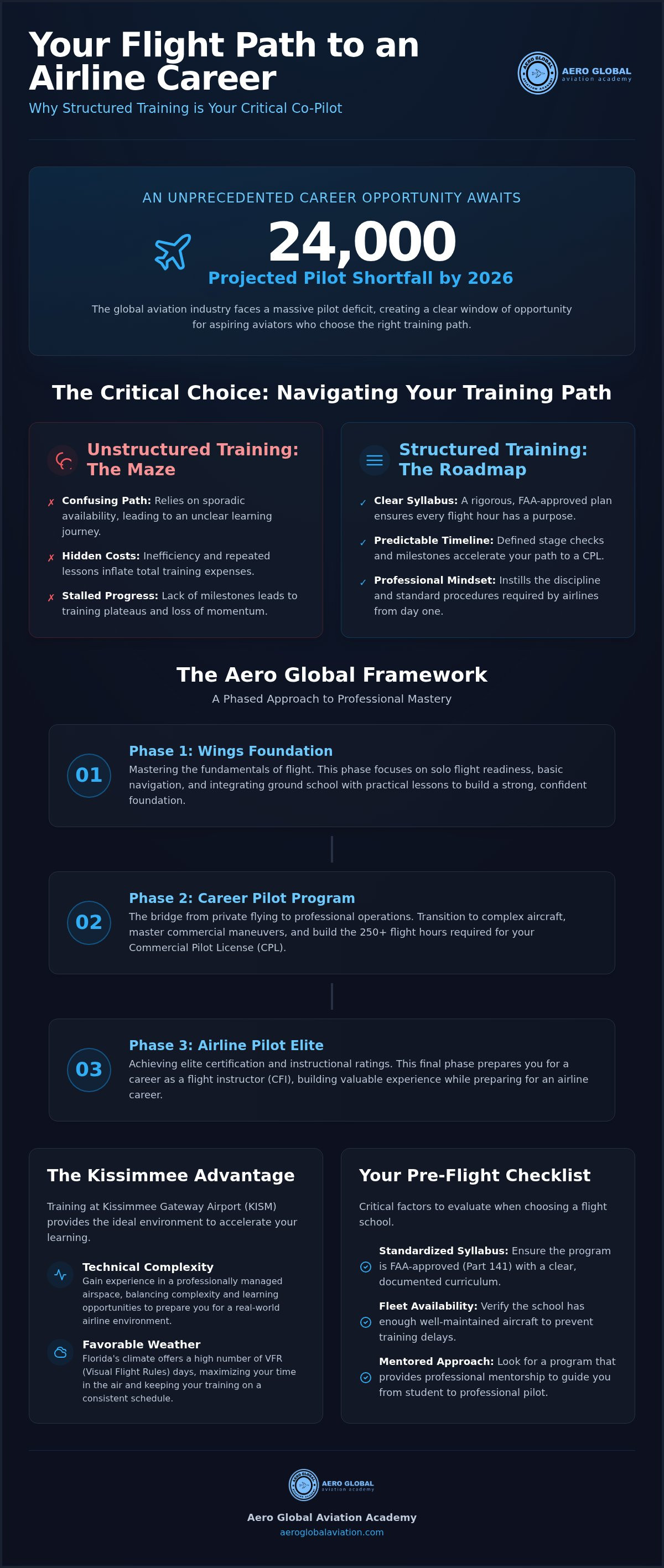
By the end of 2026, the global aviation industry will face a shortfall of approximately 24,000 pilots, creating an unprecedented window of opportunity for those ready to take the controls. You've likely felt the pull of the cockpit but hesitated because of the confusing maze of FAA ratings or the fear of hidden costs that often plague unstructured schools. It's natural to worry that Florida's afternoon thunderstorms might stall your progress or that you'll be left to navigate this complex path without a roadmap. That's why choosing structured flight training programs Kissimmee is the most critical decision you'll make for your professional future.
We understand that your goal isn't just to fly; it's to build a career that lasts. This guide will show you how a clear, mentored curriculum at Kissimmee Gateway Airport transforms your ambition into an airline-ready reality. You'll gain a definitive timeline from zero experience to your CFI rating, ensuring you hit every milestone with confidence. We'll explore how our Career Pilot Program and Airline Pilot Elite paths provide the professional mentorship you need from day one, turning the vast Florida sky into your most productive classroom.
Key Takeaways
- Learn how structured flight training programs Kissimmee eliminate the uncertainty of ad-hoc learning by providing a clear, syllabus-driven roadmap to your commercial license.
- Explore the three distinct paths at Aero Global, from the Wings Foundation to the Airline Pilot Elite program, to find the curriculum that matches your 2026 professional goals.
- Discover why training at Kissimmee Gateway Airport (KISM) offers the ideal balance of technical complexity and favorable weather to keep your training timeline on track.
- Understand the critical factors for evaluating a flight school, including how to verify standardized syllabi and ensure fleet availability actually meets student demand.
- See how a mentored approach bridges the gap between student and professional, turning technical ratings into tangible career destinations in a high-demand industry.
What Is Structured Flight Training and Why Does It Matter?
Choosing to become a pilot is a bold commitment, but how you learn determines how quickly you'll reach the captain's seat. At its core, What is Flight Training? in a professional context is the difference between a casual hobby and a disciplined career path. While ad-hoc training often relies on the whims of an instructor's schedule or a student's sporadic availability, structured flight training programs Kissimmee utilize a rigorous, syllabus-driven approach. This means every hour in the cockpit has a specific objective, ensuring you don't waste time or money repeating lessons you've already mastered.
The FAA provides two primary frameworks for this: Part 61 and Part 141. While Part 61 offers flexibility for those flying for fun, Part 141 is the gold standard for career-track students. It requires FAA-approved syllabi, regular stage checks, and higher levels of oversight. This structure isn't just about following a schedule; it's about cultivating a professional mindset. It prepares you for the highly regulated environment of commercial airlines where following standard operating procedures is a matter of safety and efficiency.
Structure vs. Flexibility: Finding the Balance
Career-oriented students thrive when they have clear milestones to hit. Instead of simply building hours, you are building professional proficiency. At Aero Global, we integrate mentorship into every lesson of our structured paths. Whether you're in the Wings Foundation or the Airline Pilot Elite program, your progress is tracked against industry-standard benchmarks. This prevents the common frustration of feeling stuck, as your mentor identifies exactly which skills need refinement before you move to the next phase.
The Long-Term ROI of a Disciplined Curriculum
A disciplined curriculum offers a predictable timeline for reaching your Commercial Pilot License (CPL). By using standardized stage checks, we significantly reduce the risk of training plateaus where students often lose momentum and spend extra money on remedial flights. For the 2026 pilot, structured training serves as a career-accelerator that transforms raw ambition into a verifiable resume of skill. It optimizes your financial investment by ensuring every dollar spent brings you one step closer to a high-paying airline career.
The Aero Global Framework: Wings Foundation to Airline Pilot Elite
Success in the flight deck isn't a matter of luck; it's the result of a deliberate, phased progression. At Aero Global, we've designed a framework that moves you through logical milestones, ensuring that your skills as a pilot grow in lockstep with your certifications. This "Total Pilot" approach means you aren't just checking boxes to satisfy FAA requirements. You're building a professional profile that airlines value. By choosing structured flight training programs Kissimmee, you're committing to a path where every hour in the logbook serves a larger career purpose.
Phase 1: Mastering the Fundamentals with Wings Foundation
Your journey begins with the Wings Foundation, where we focus on the essential bedrock of flight. This phase is dedicated to solo flight readiness and basic navigation, ensuring you feel at home in the cockpit before moving to advanced maneuvers. We believe theory must match practice, so our ground school is tightly integrated with your flight lessons. If you're ready to start, our private pilot license florida guide provides a detailed 2026 roadmap for this initial step.
Phase 2: The Professional Shift in the Career Pilot Program
Once you've mastered the basics, the Career Pilot Program serves as the bridge from private flying to professional operations. This is where the shift in mindset happens. You'll transition to complex aircraft and master commercial maneuvers while building the 250 flight hours required for your CPL. Given the positive pilot career outlook, this phase is designed to build your hours with purpose. You can learn more about the specifics of this transition in our guide to commercial pilot training.
Phase 3: Elite Certification and Instructor Ratings
The final stage of our framework is the Airline Pilot Elite program. This is where you reach the peak of your initial training by incorporating advanced instructor ratings. Becoming a mentor yourself through CFI and CFII certifications is one of the most effective ways to sharpen your own skills. You'll also master multi-engine operations, a critical requirement for regional airline readiness. This program doesn't just prepare you to fly; it prepares you to lead. If you want to see how these phases fit your specific timeline, you can explore our training paths to find your perfect starting point.
The Kissimmee Advantage: Optimal Environment for Structured Training
Kissimmee Gateway Airport (KISM) serves as more than just a base of operations; it's a strategic asset for your aviation education. Choosing a training location is as important as choosing a curriculum, and KISM provides a unique balance of technical complexity and operational accessibility. While major hubs like Orlando International (MCO) often involve exhausting taxi times and expensive delays, KISM allows you to get into the air quickly and stay there. This efficiency is the backbone of structured flight training programs Kissimmee, ensuring your scheduled flight blocks are spent mastering maneuvers rather than waiting on the tarmac.
Weather Patterns and Training Efficiency
Central Florida is famous for its sunshine, and for a student pilot, that translates to over 300 days of VFR (Visual Flight Rules) weather annually. This consistency is vital for maintaining momentum during your training. In regions with harsher climates, students often face weeks of grounded flights, which inevitably leads to skill decay and costly remedial lessons. By training in Kissimmee, you stay on syllabus. We maximize this advantage by utilizing early morning flight blocks. These sessions take advantage of the calmest air and clearest skies before the typical afternoon heat builds, allowing you to focus entirely on meeting FAA Private Pilot Certification Requirements without the distraction of heavy turbulence or weather cancellations.
KISM Airspace: A Professional Training Ground
Navigating structured airspace is a core skill for any airline-bound professional, and KISM offers the perfect laboratory for this development. The airport features an active control tower, requiring you to communicate effectively with Tower and Ground controllers from your very first lesson. This environment builds radio confidence early, a trait that sets our graduates apart. You'll operate in close proximity to Class B airspace, giving you a front-row seat to how complex traffic flows without the overwhelming delays of a major commercial hub.
Our strategic location also offers easy access to a variety of cross-country destinations across Florida. Whether you're flying to the coast or navigating toward the interior, the variety of airport environments near Kissimmee ensures that your transition from PPL to CPL is rich with real-world experience. This geographic diversity prepares you for the unpredictable nature of professional flying, turning every cross-country flight into a meaningful building block for your career. It's this combination of ideal weather and professional-grade airspace that makes Kissimmee the definitive choice for serious 2026 pilot candidates.
How to Evaluate Structured Flight Programs in Central Florida
Choosing where to train is the most significant investment you'll make in your early career. While many schools boast about their aircraft, the real value lies in the curriculum and the culture of the institution. When you evaluate structured flight training programs Kissimmee, you must look for a standardized syllabus that exists independently of any single instructor. If your training depends on the whim of a specific CFI, you risk delays and inconsistent skill development if that instructor moves on to the airlines. A truly professional program offers clear milestones for your Private Pilot License (PPL), Instrument Rating, and Commercial certificates.
You also need to pass the "Mentor Test." Does the school treat you like a customer or a future colleague? At Aero Global, we view ourselves as your practical mentors. This means we invest in your long-term roadmap, ensuring you don't just build hours but build the proficiency required for a multi-decade career. We also maintain a strict balance between our fleet size and student count. There is no benefit to a structured syllabus if you can't get on the schedule to fly it. High fleet availability is a non-negotiable requirement for anyone aiming to complete their training on a professional timeline.
Questions to Ask During Your Discovery Flight
A discovery flight is more than just a chance to take the controls; it's your first opportunity to audit the school's operations. Use this time to ask pointed questions about their infrastructure. You should feel confident that the school has a digital or highly organized system for student progress tracking. To see how professional organizations leverage technology for efficiency, you can check out API Pilot for custom software development solutions. Ask about the typical timeline for a student in our Career Pilot Program. You should also verify if the school offers structured ground school sessions. While self-study is a component of aviation, having a dedicated instructor lead you through complex theory ensures you don't develop gaps in your knowledge before your FAA checkride.
Comparing Career Outcomes and Industry Alignment
Your goal is the flight deck, so your training must include advanced ratings that make you employable. Ensure the program you choose offers Multi-Engine and CFI (Certified Flight Instructor) ratings. These aren't just extras; they are the primary tools you'll use to bridge the gap from 250 hours to the 1,500 hours required for the airlines. Check our checklist for the best flight schools in florida to see how different programs stack up in terms of industry reputation and community standing. If you are ready to see how a professional environment changes your trajectory, book your discovery flight with Aero Global today and take the first step toward your 2026 career goals.
Launching Your Career at Aero Global Aviation Academy
The path to the flight deck is closer than you think. By choosing structured flight training programs Kissimmee, you aren't just signing up for lessons; you're joining a legacy of regional excellence right here in Central Florida. Our "Practical Mentor" approach ensures that you never feel like just another number in a logbook. Instead, you'll find a dedicated local partner invested in your individual success. In 2026, the industry doesn't just need pilots; it needs disciplined professionals who can handle the complexity of modern aviation with absolute confidence.
We take immense pride in our Kissimmee roots and the professional possibilities this region provides. Our academy is designed to facilitate a seamless transition from a newcomer with zero hours to a highly competent professional. Whether you begin with the foundational Wings Foundation or commit to the comprehensive Airline Pilot Elite track, you'll experience a logical, rewarding progression that respects your time and your career goals.
Your First Destination: The Discovery Flight
Every great aviation career begins with a single hour in the air. Your discovery flight is designed to give you a genuine taste of the cockpit while introducing you to the Aero Global campus. During this first hour, you'll take the controls under the guidance of an expert instructor, experiencing the thrill of flight firsthand. After landing, you'll meet your mentor to tour our facilities at Kissimmee Gateway Airport. We'll sit down with you to map out a personalized training timeline, ensuring your path to certification is clear, attainable, and aligned with your lifestyle.
Joining the Aero Global Community
Training is significantly more effective when you're surrounded by a supportive, career-focused peer group. At Aero Global, you'll join a community of students who push each other to master complex ratings, creating a professional environment that mirrors the cockpit of a major airline. This collaborative spirit is a hallmark of our academy and a key reason why our graduates stand out in the hiring pool.
This community focus is especially vital when considering current industry needs. With analysts identifying a global pilot shortfall expected to peak in 2026 at approximately 24,000 pilots, the window for career advancement is wide open. You can explore how our structured curriculum fits into the broader airline pilot career path to see the long-term potential of your training. From your first solo to your multi-engine rating, we provide the steady rhythm of progress that makes a complex professional world feel within reach.
Take Command of Your Aviation Future
The global pilot shortage creates a unique opportunity for those who begin their journey with a clear plan. By enrolling in structured flight training programs Kissimmee, you're choosing a path that prioritizes your progress and professional proficiency. We've explored how our Red Dot level curriculum design and expert instructors at KISM provide the stability you need to succeed. From our foundational courses to comprehensive PPL to CFI pathways, every lesson is a deliberate step toward your ultimate destination.
You don't have to navigate the complexities of FAA ratings alone. Our academy serves as your practical mentor, providing the resources and regional advantages necessary to stay on schedule. The transition from student to professional is a structured process, and we're here to guide you through every milestone with confidence. The sky is waiting for you to take the controls and define your future in a high demand industry.
Book Your Discovery Flight and Start Your Structured Journey Today. Your 2026 roadmap starts with a single hour in the air.
Frequently Asked Questions
What is the difference between Part 61 and Part 141 structured flight training?
Part 141 training follows a rigid, FAA approved syllabus with frequent stage checks, while Part 61 offers more flexibility in lesson timing. Career students often prefer the 141 framework because it provides a more predictable path toward airline hiring. Choosing structured flight training programs Kissimmee under the Part 141 umbrella ensures you meet specific proficiency benchmarks that professional recruiters value when reviewing your flight experience.
How long does it take to complete the Career Pilot Program in Kissimmee?
Most dedicated students complete the Career Pilot Program in approximately 6 to 10 months. This timeline depends on your flight frequency and the consistent Central Florida weather. Training at KISM helps you stay on schedule because the area offers over 300 days of VFR weather annually. Finishing on this timeline is vital as the global pilot shortfall is expected to peak in 2026.
Can I start the Airline Pilot Elite program with zero flight experience?
Yes, you can begin the Airline Pilot Elite program with absolutely zero flight hours. This comprehensive path is specifically designed to take you from your very first discovery flight all the way to advanced instructor certifications. It integrates foundational skills with the multi engine and CFI ratings needed to secure a position at a regional airline, making it our most robust career roadmap.
What are the prerequisites for joining the Wings Foundation at Aero Global?
The primary prerequisites for the Wings Foundation are being at least 16 years old to solo and 17 to earn the certificate, plus holding a valid FAA Medical Certificate. You don't need any prior aviation knowledge to start. We provide the ground school and flight instruction necessary to master the fundamentals, making it an accessible entry point for anyone pursuing their first license.
Is Kissimmee Gateway Airport a good place for beginner pilots?
Kissimmee Gateway Airport is an exceptional environment for beginners because it balances technical complexity with operational accessibility. You'll learn to communicate with an active control tower from your very first lesson, which builds early radio confidence. Unlike larger commercial hubs, KISM doesn't suffer from massive airline delays, so you spend your flight blocks practicing maneuvers rather than waiting on the taxiway.
Does the structured flight program include ground school training?
Yes, our structured programs include integrated ground school training to ensure your theoretical knowledge matches your cockpit skills. We don't leave you to navigate self study materials alone. Our instructors lead you through the complex aerodynamics, regulations, and navigation topics required to pass your FAA written exams. This collaborative approach is a hallmark of high quality structured flight training programs Kissimmee.
What happens if I already have my PPL and want to join a structured program?
If you already hold a Private Pilot License, you can seamlessly transition into our Career Pilot Program or Airline Pilot Elite track. We'll evaluate your current logbook and proficiency to place you at the correct stage of our syllabus. This ensures you don't repeat foundational work while still benefiting from the mentored, milestone based progression that professional pilot careers require for long term success.
Are financing options available for structured flight training in Florida?
Students often utilize specialized aviation loans, personal savings, or scholarships to fund their professional training. While we don't provide direct financing, we can guide you toward common industry resources. It's also helpful to know that the annual cap for vocational flight training through the GI Bill for the 2026 to 2027 academic year is $17,662, which is a significant asset for eligible veterans.


